The fourth free set of 25 questions for the North Carolina DMV knowledge test (the written test many people call the NC permit test). None of these questions is in our other free tests. Same format as the real test: you need 20 correct to pass, and every answer comes with an explanation based on the current NC driver handbook. No sign-up.
25 questions
To pass: 20 of 25
10 with pictures
An explanation for every answer
✓Questions checked against the 2026 NC Driver’s Handbook
Question 1/25
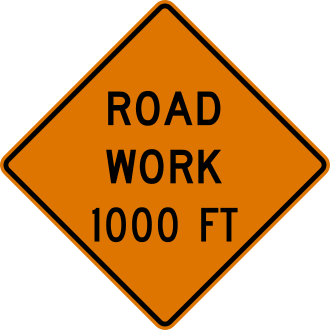
You pass this sign. According to the NC handbook, where does the posted work-zone speed limit stop applying?
At the last sign that marks the zone's end
At a point 1000 feet beyond this very sign
Where the last orange cone or barrel stands
Where you stop seeing workers and machines
ROAD WORK 1000 FT warns that work begins 1000 feet ahead; the number is not the length of the zone. The NC handbook defines a highway work zone as the area between the first sign that indicates its beginning and the last sign that indicates its end, and it is unlawful to exceed the posted work-zone speed limit inside it.
Question 2/25
A traffic light turns red as you approach. There is no stop line and no marked crosswalk. Where must you stop?
Before entering, where you can see the cross street
Directly under the signal, partly into the intersection
At least 50 feet back from the intersection
Next to the signal pole on the far corner
The NC Driver Handbook says that when a stop sign, traffic light or flashing light requires you to stop, you must stop at the marked stop line. If there is no stop line or marked crosswalk, stop before entering the intersection, at a point where you can see the intersecting street.
Question 3/25
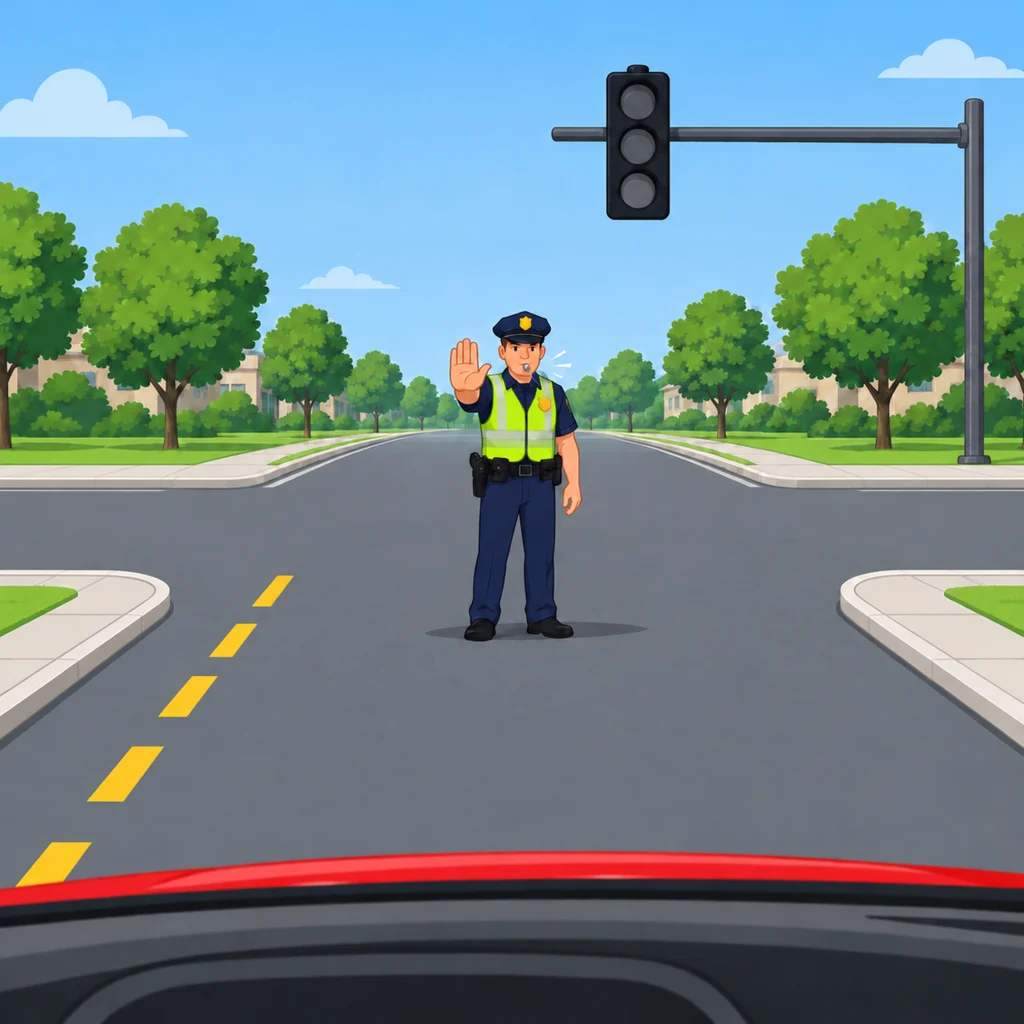
A traffic officer holds up a hand with the palm toward you and gives a long whistle blast. What does it mean?
Stop and wait
Go on, but yield to pedestrians
Go if your traffic light is green
Slow down and proceed
Per the NC handbook, a traffic officer usually signals stop by holding up a hand with the palm toward the vehicle and giving a long whistle blast. The officer signals you to go by motioning with the hand and giving a series of short whistle blasts. At night the officer may use a flashlight. Obey the officer's signals instead of traffic lights and signs.
Question 4/25
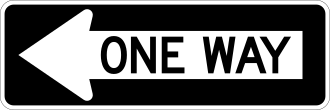
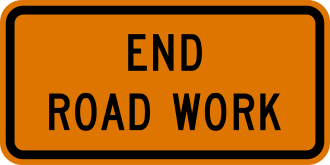
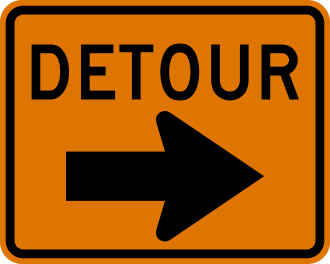
The road ahead is closed for construction, and traffic is being sent around it by another route. Which sign points you along that temporary route?
One way
End of road work
Detour
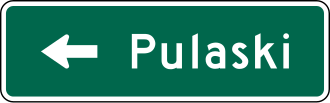
Guide sign
The orange DETOUR sign with an arrow leads you around a closed section.
Question 5/25
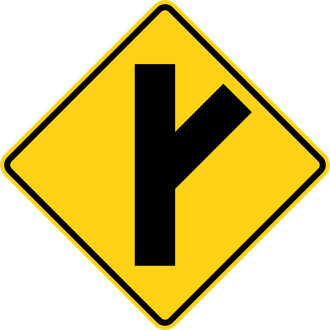
What does the line branching off to the right on this sign show?
The road forks ahead
Side road at an angle on the right
Traffic merges into your lane from the right
Right lane ends ahead
Side Road sign: a side road joins yours at an angle from the right while your road continues straight. Watch for vehicles pulling out of it and for vehicles ahead slowing down to turn into it. On the Merging Traffic sign the line curves smoothly into the road; on a fork sign the road splits in two.
Question 6/25
Your car stalls on the railroad tracks. What should you do first?
Get out at once and move away from the tracks
Keep trying to restart the engine on the tracks
Stay in the car and call 911 for a tow truck
Shift to neutral and push the car off the tracks
The NC Driver Handbook says that if your vehicle stalls on or near the tracks, get out immediately and move away from the vehicle and the tracks. When you are safe, call the emergency number on the blue sign at the crossing.
Question 7/25
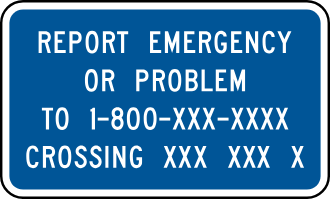
Your car stalled on a railroad crossing. You got out and moved away from the tracks. What is this blue sign at the crossing for?
To call the tow company whose number is on it
To look up the crossing number in your GPS
To phone the railroad and report the problem
To report road damage to the NCDMV office
A blue ENS sign is required at every NC railroad crossing, in each direction; it shows the railroad's emergency phone number and the crossing ID number. The NC handbook says that once you are safely away from the tracks, you should call that number and report the problem; it is the quickest way to stop a train.
Question 8/25
Driving a regular (non-commercial) car, you are convicted of failure to yield the right of way to another car at an intersection. No one was hurt. How many DMV points are added?
1 point
2 points
3 points
4 points
The NC Driver Handbook point table gives 3 points for failure to yield right of way. If a failure to yield causes serious bodily injury, the license is suspended for 90 days and there is a $500 penalty.
Question 9/25
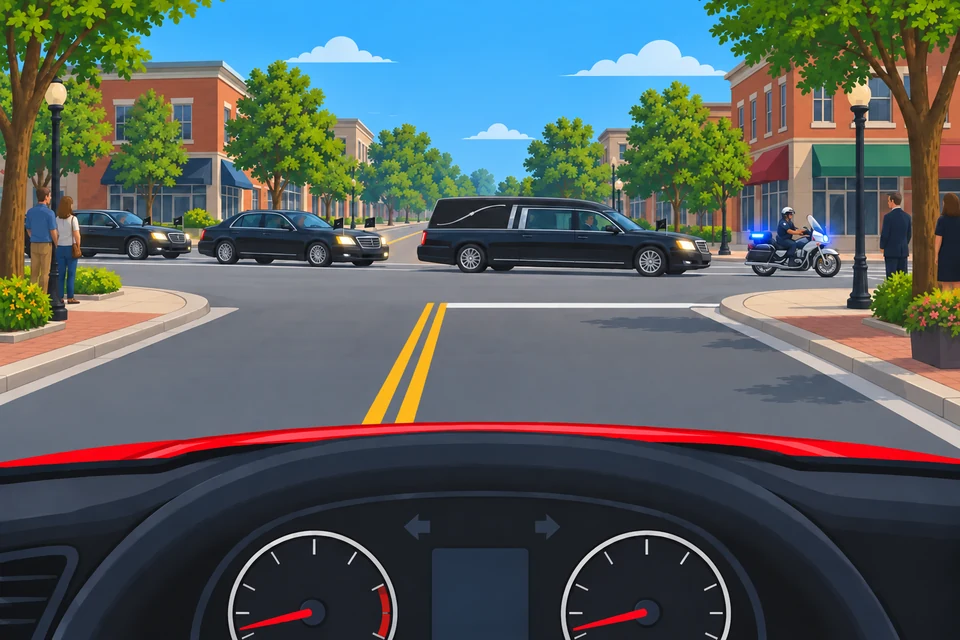
How should you behave toward a funeral procession?
Pass it on a road with one lane each way
Drive between its cars where there is a gap
Cut across it when you have a green light
Do not break it up or get in its way
Never drive between vehicles in a procession. Drivers going the same way may not pass it (except on roads with 2+ lanes in that direction); oncoming drivers may yield by slowing down. If the procession goes through a red light, do not enter the intersection on your green unless you can do it safely without crossing its path. All procession vehicles must have headlights on (and hazard lights, if equipped).
Question 10/25
Which of these actually lowers your blood alcohol concentration (BAC)?
Strong coffee: caffeine quickly lowers your BAC
A cold shower and some fresh air before driving
A big meal: it soaks up the alcohol already in you
Time: waiting it out
Only time lowers BAC. The NC handbook: the only thing that sobers up a drinker is time; coffee, a big meal or cold showers will not work. They only create a false sense of sobriety.
Question 11/25
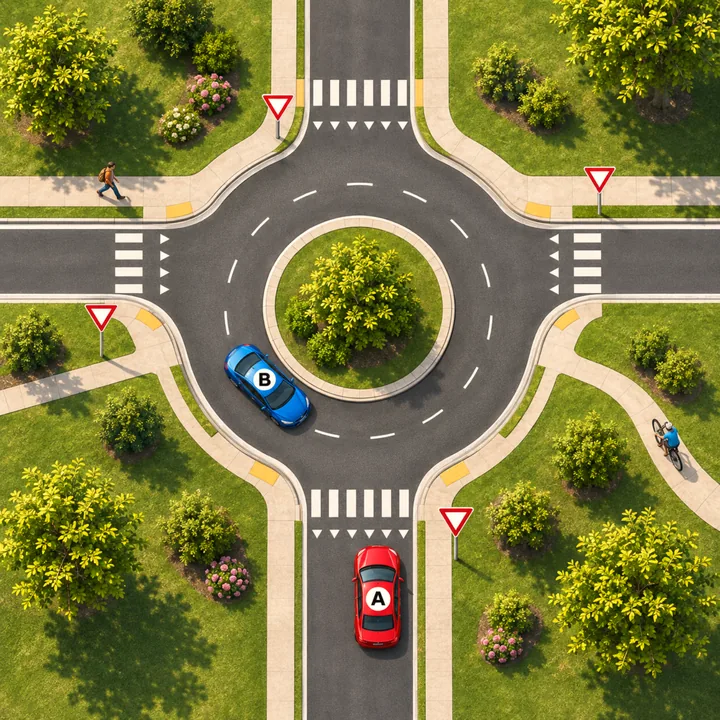
When entering a roundabout, to whom must you yield?
Traffic already in the circle
No one: entering traffic has priority
Only pedestrians at the entry crosswalk
Only cars at the next entry to your left
When entering a roundabout, yield to any vehicles or bicyclists already in it, and to pedestrians in the crosswalk. Traffic moves counterclockwise, and drivers already inside do not yield to those entering.
Question 12/25
How do DMV points differ from insurance points in NC?
It is one system: DMV points raise your insurance
Only insurance points can lead to losing your license
DMV points clear after a year; insurance points stay
DMV points: license; insurance points: premiums
These are two separate systems. DMV points determine license suspension. SDIP insurance points affect premiums and can be added for an at-fault accident even without a citation. The handbook: insurance companies use a different point system to set rates; ask your insurance agent.
Question 13/25
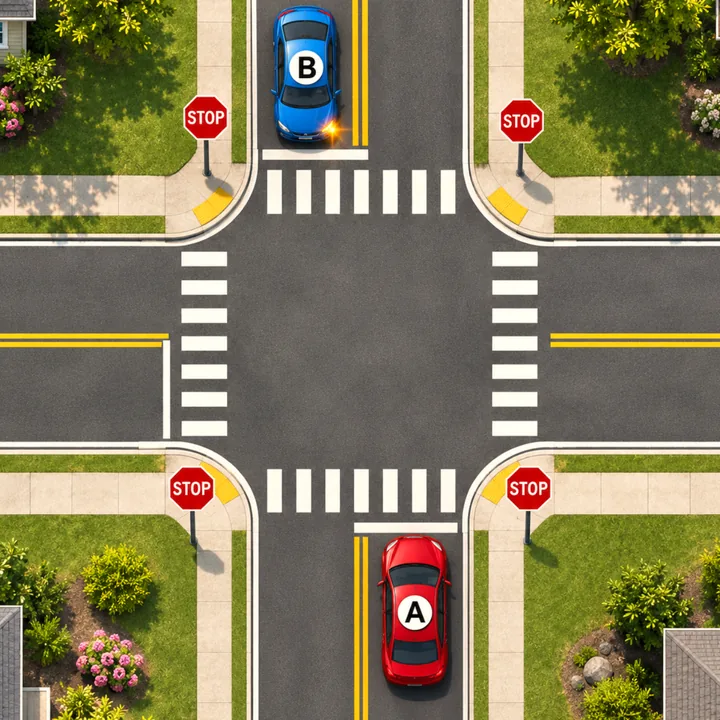
Two cars facing each other stop at a four-way stop at the same time. One goes straight, the other turns left. Who goes first?
The left-turner
The one going straight
Whoever signaled first
The larger vehicle
Per the NC handbook, when two facing vehicles arrive at the same time and one goes straight while the other turns left, the driver turning left must wait: the driver going straight has the right of way.
Question 14/25
How long is the license revocation for a first DWI conviction in North Carolina?
30 days
6 months
1 year
2 years
A first DWI conviction in NC results in a mandatory 1-year license revocation.
Question 15/25
The signal has changed and you now have a green light, but a pedestrian is still in the street in front of your car. What must you do?
Go: the green light gives you the right of way
Let the pedestrian finish crossing safely
Honk so the pedestrian hurries up
Drive slowly around behind the pedestrian
The NC Driver Handbook says that if the signal changes to yellow or red while a pedestrian is still in the street, drivers must allow the pedestrian to finish crossing safely. Wait until the pedestrian is out of your path.
Question 16/25
How many DMV points are added in NC for following too closely (tailgating) in a regular car?
1 point
2 points
3 points
4 points
The NC Driver Handbook point table gives 4 points for following too closely. Illegal passing, driving on the wrong side of the road and hit-and-run with property damage only are also 4 points each.
Question 17/25
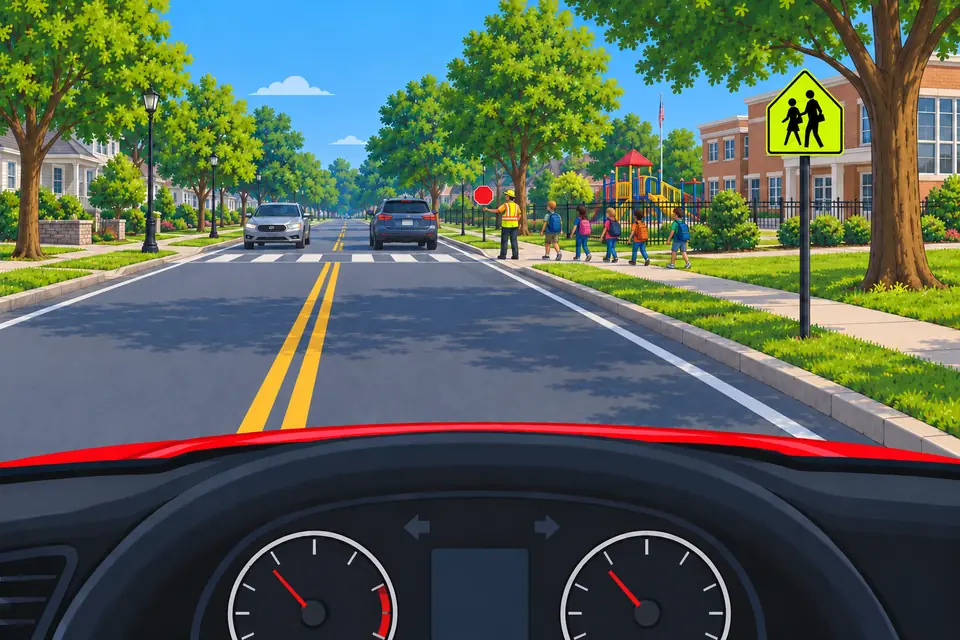
In many NC school zones, when is the speed limit reduced?
On weekends and holidays
From sunset to sunrise
During certain school hours
Whenever a police car is parked in the zone
The handbook: the five-sided sign warns of a school zone or school crossing; be especially watchful for children there. In many school zones, the speed limit is reduced during certain school hours. The handbook gives no number, so obey the limit on the sign. Speeding over the posted school-zone limit costs 3 points.
Question 18/25
You back into a parked car in a parking lot and cannot find its owner. What does the NC Driver Handbook tell you to do?
Drive away, since no one saw it
Wait 10 minutes, then leave if no one comes
Report it only to your own insurance company
Give all the details to the nearest officer
The NC Driver Handbook says that if you do not know the owner of the damaged property, write down all the information you can gather and give it to the nearest law enforcement officer. When the other people are there, give and get name, address, driver license number, vehicle registration number and insurance company.
Question 19/25
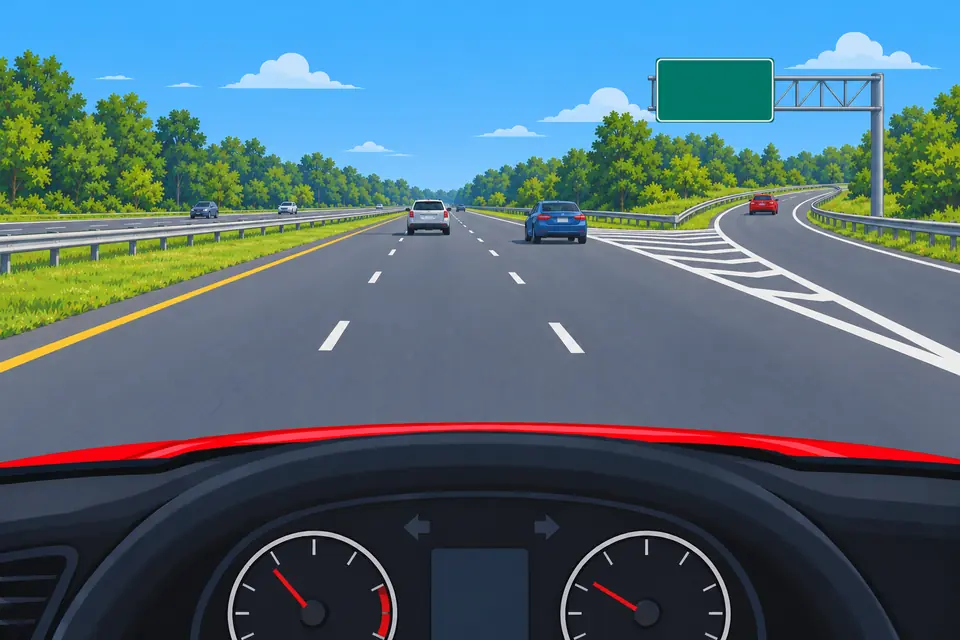
What should you do before exiting a freeway?
Slow down in the through lane before you reach the exit
Move over early; slow down only on the exit lane
Cut over to the exit lane at the very last moment
Turn on hazards and drive slowly until the exit
Before exiting, move into the exit lane in advance and slow down on the deceleration lane, not in the through lane; otherwise you endanger the flow.
Question 20/25
Until what age must children be secured in a child safety seat or booster in NC?
Until age 4 and under 40 pounds
Until age 8 and under 80 pounds
Until age 10 and under 100 pounds
Until age 12 and under 120 pounds
In NC, children under 8 years old and under 80 pounds must ride in a weight-appropriate child seat or booster. Children under 5 and under 40 pounds must ride in a rear seat if the vehicle has an active front passenger airbag and a rear seat, unless the child seat is designed for use with a front airbag.
Question 21/25
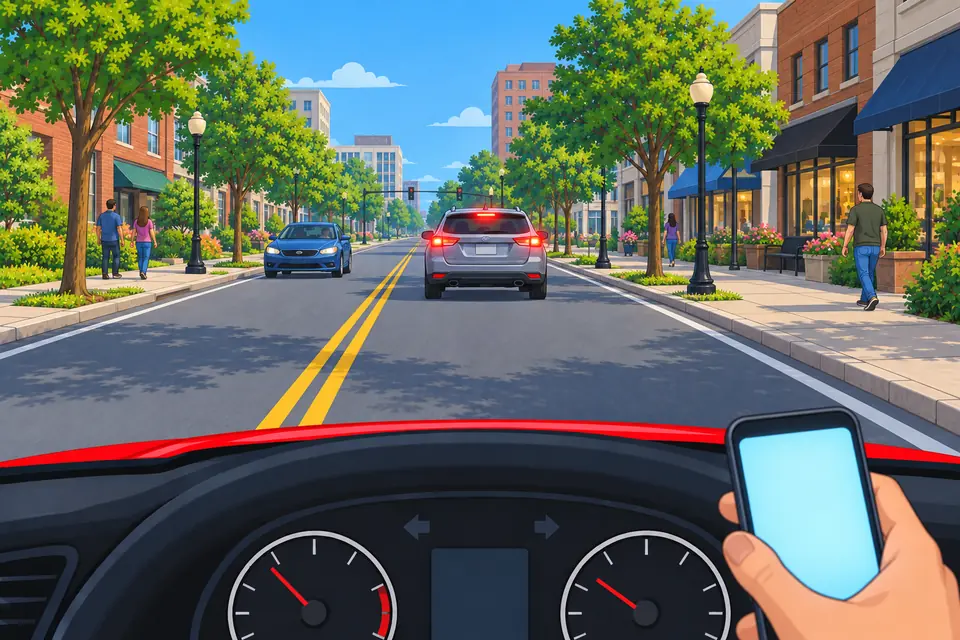
What does NC law prohibit all drivers from doing with a phone while driving?
Any phone use at all, even short calls
Talking on the phone on speakerphone
Texting and reading or writing email
Using GPS navigation on the phone
Per the NC handbook, it is unlawful for any driver to use a cell phone for email or text messages while driving. Drivers under 18 may not use a cell phone at all while driving, except to call 911 in an emergency or to call a parent, legal guardian or spouse (G.S. 20-137.3).
Question 22/25
You need to stop for a few minutes on a city street. Which spot is on the handbook's list of places where you should not park?
30 feet from a fire hydrant
In front of someone's driveway
40 feet from the curb line of a cross street
At the curb on the right side of a two-way street
The NC Driver Handbook says you should not park at an intersection or in front of a driveway. It also bans parking within 15 feet of a fire hydrant and within 25 feet of the curb line of an intersecting street.
Question 23/25
Who is required to wear a seat belt in a vehicle in NC?
The driver and all passengers
Only the driver
Only front-seat passengers
No one; it is just advice
In NC the driver and all passengers must wear seat belts. Children must be in appropriate child restraints.
Question 24/25
At night an oncoming driver does not dim the high beams. What does the NC Driver Handbook say you can do?
Blink your high beams once, then stay on low
Switch to high beams until the other driver dims
Flash your high beams again and again until they dim
Turn your headlights off briefly as a signal
The NC Driver Handbook says you can remind the other driver by blinking your high beams once; if the driver still does not dim, keep your lights on low beam. Look slightly to the right, use the edge of the road as a guide and reduce speed.
Question 25/25
How should you brake with ABS?
Pump the pedal rapidly
Press lightly and gently
Steer only, don't brake
Press hard and hold firm
With ABS: press hard and hold firm. Do NOT pump: this reduces ABS effectiveness.
✓One-time payment, no subscription or auto-renewal
✓No sign-up: your account uses your payment email
✓Failed on your first try within 30 days of payment? Send a photo of the result and we refund you within 5 business days (Terms)
NC issues licenses with an SSN; without one, only to people not eligible for an SSN, on documents of lawful presence. An ITIN is not accepted. If you cannot get a license, this course will not help.
💳 Card payments are processed by Stripe. Sales tax, if your state charges it, is added on the payment page.
Your account is created automatically when you pay, using the email you enter on the payment page. We send a link to that email so you can set your password. If an account with that email already exists, the access is added to it.
Already have an account? Log in before you pay so the access is added to that account. If you don’t, the access opens in the account for the email you pay with.
We will email you a review of your mistakes: each question you missed, the correct answer and the explanation. It helps you study before the test.
Your review arrives right away, followed by 2 more emails (a reminder and a list of tips). No spam: you can unsubscribe with one click. By submitting your email you agree to receive them; see the privacy policy.
What practice test 4 covers
Signs, signals and pavement markings: 6 questions
Right of way, school buses, railroad crossings: 6 questions
Alcohol, points and license rules: 4 questions
Speed and following distance: 2 questions
Safe driving: weather, night, emergencies, sharing the road: 7 questions
The questions cover the main topics of the North Carolina driver handbook. The sign test is separate at the DMV: 12 signs shown without words, and you must identify 9. Practice it with our North Carolina road signs guide.
Before the real test
The knowledge test usually has 25 questions; the official rule is 80% correct (19A NCAC 03B .0201), which is 20 of 25. If you do not pass, you can retake it after 7 calendar days. The full guide to the test format is on free practice test 1.
Written and checked by the Driver-Prep team against the current North Carolina Driver Handbook (revised May 2025). Updated .
Driver-Prep is an independent educational project. We are not affiliated with the NCDMV or the NCDOT; the practice questions are written from the official North Carolina driver handbook.
 RU
 Español