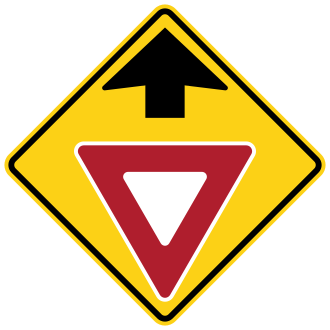
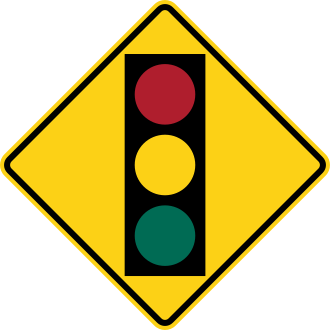
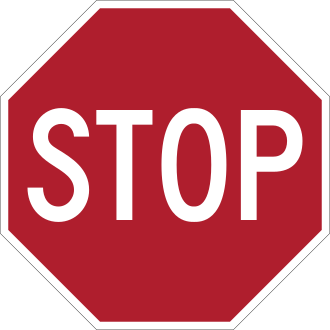
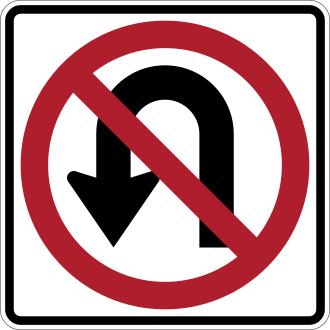
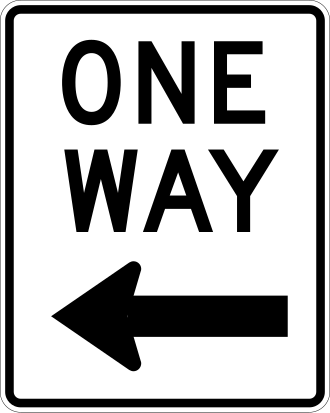
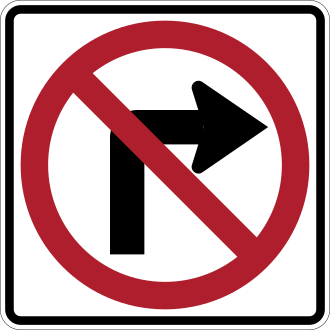
Question 1/25

Cars A and B arrive at an all-way STOP at the same time; B is on A's right. Who goes first?
Answer: B. At an all-way stop, when vehicles arrive at the same time, you yield to the driver on your right. B is to the right of A, so A yields and B goes first.
Question 2/25
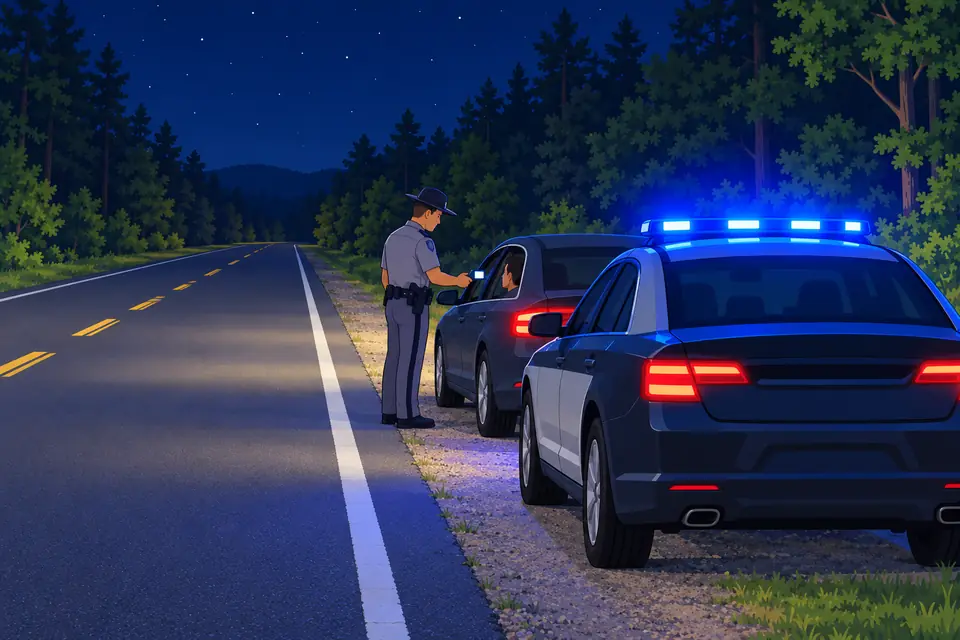
What is the blood alcohol concentration (BAC) limit for drivers aged 21 and older in North Carolina?
In NC, the BAC limit for drivers 21+ is 0.08%. However, you can be charged with DWI at a lower BAC if your driving is noticeably impaired.
Question 3/25
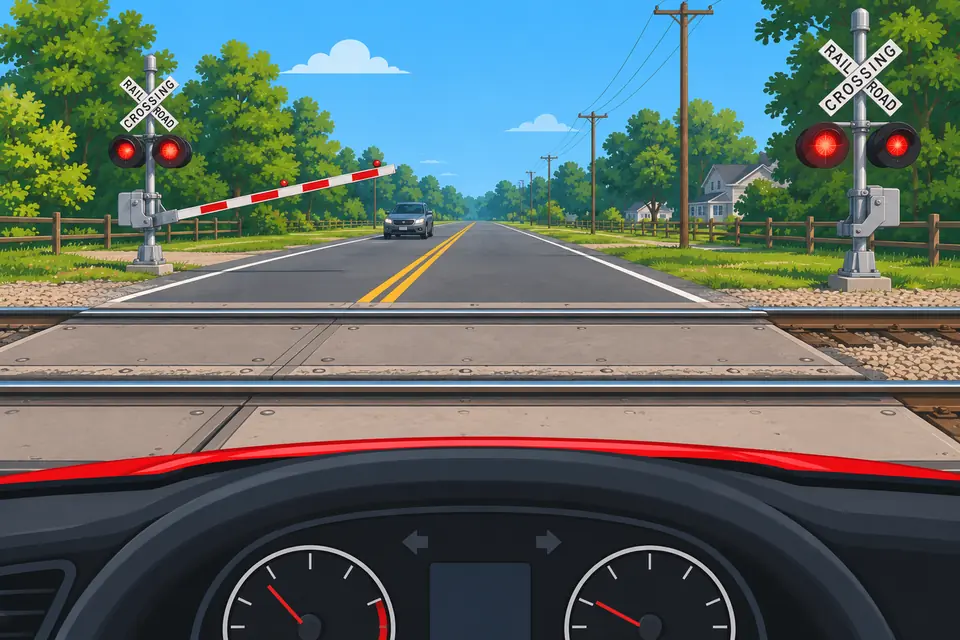
You are crossing railroad tracks and the gates begin to lower. What should you do?
Keep moving and clear the crossing
Stop on the tracks and wait for the gate to go back up
Back up quickly to get behind the gate line
Stop, get out of the car and move away from the tracks
Per the NC handbook, if you are crossing the tracks and the warning lights begin flashing or the gates start to come down, do not stop and do not back up: KEEP MOVING. The gate is flexible and will not trap you. If you stop and try to back up, your vehicle may stall.
Question 4/25
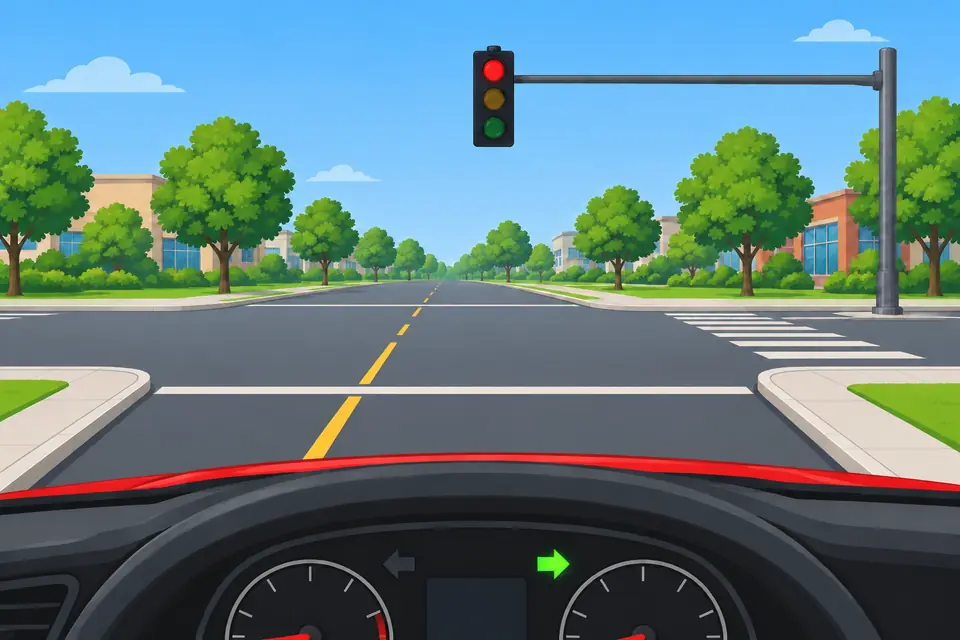
Is a right turn on red allowed in North Carolina?
Yes, after a full stop, unless a sign prohibits it
No, only on a green arrow
Yes, without stopping if the crosswalk is empty
Only where a sign specifically allows the turn
In NC, right turn on red is allowed by default. But you must first come to a complete stop and yield to pedestrians and to all other traffic using the intersection, especially cars coming from your left. If there is a NO TURN ON RED sign, the turn is prohibited.
Question 5/25
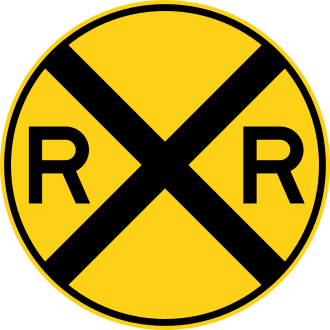
You see this sign. How should you react?
Prepare to stop: rail crossing ahead
Slow down: a work zone is ahead
Yield: roundabout ahead
Caution: pedestrian crossing ahead
This round yellow sign with RR warns of a railroad crossing ahead. It is the only circular sign on US roads. Be prepared to stop.
Question 6/25
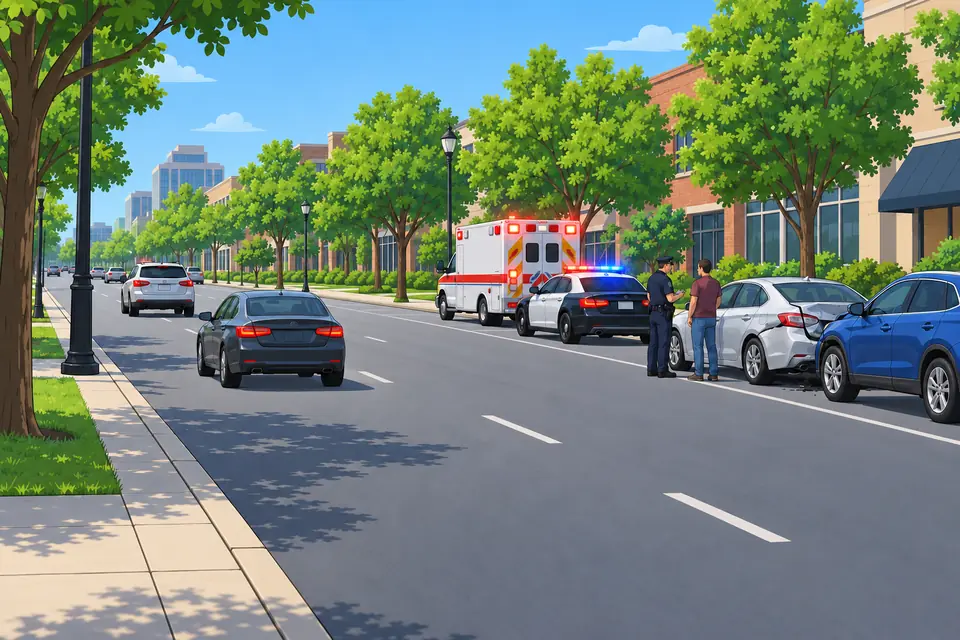
Within what distance of an emergency vehicle stopped to investigate a crash or render assistance is parking prohibited?
50 feet
100 feet
200 feet
500 feet
You may not park within 100 feet of an emergency vehicle that has stopped to investigate an accident or provide assistance.
Question 7/25
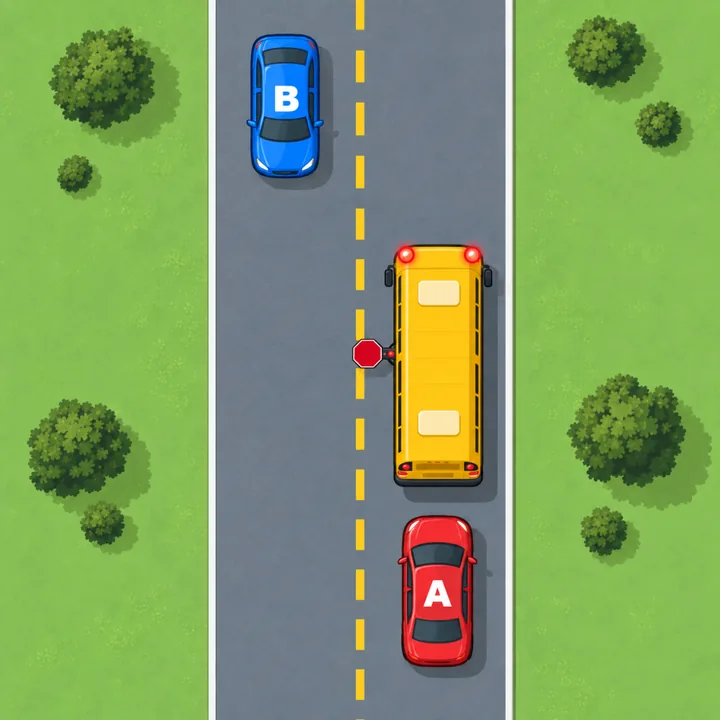
Two-lane road with no median: a school bus has stopped with red lights flashing and its STOP arm out. Who must stop?
Only A (behind the bus)
Only B (oncoming)
Both A and B
Neither
Answer: both. On a road without a median, when the bus has its red lights flashing, ALL directions must stop: both following and oncoming traffic.
Question 8/25
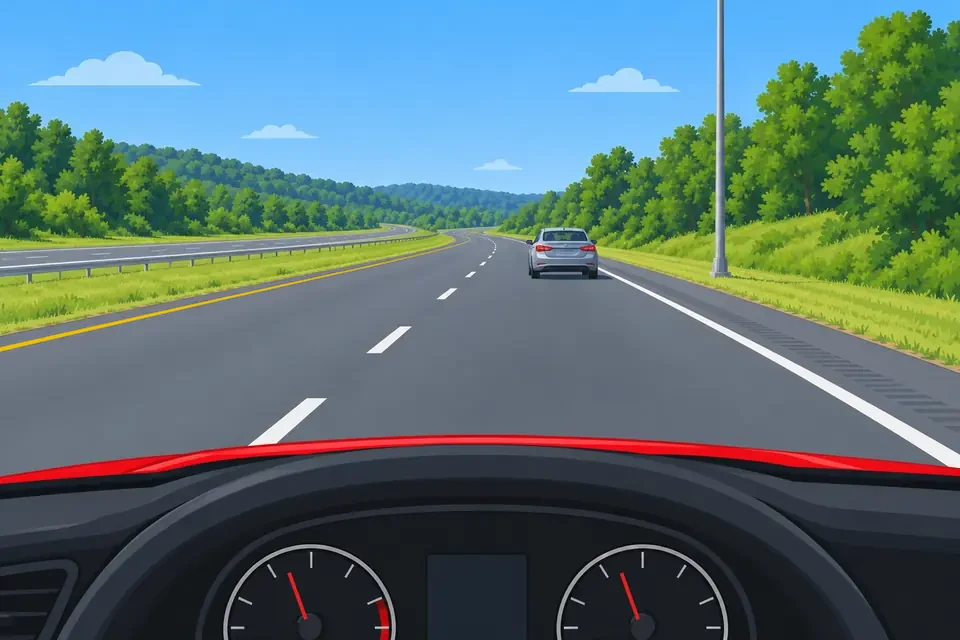
What following distance does the official NC Driver Handbook recommend?
1 second
2 seconds
4 seconds
5 seconds
The official NC handbook recommends a 2-second following distance. In real-world driving, safety organizations advise 3+ seconds, but for the test the correct answer is 2.
Question 9/25
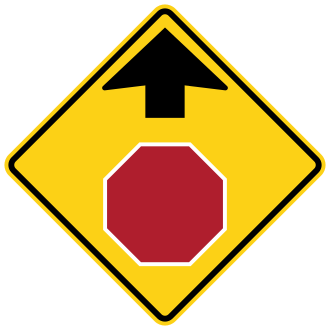
Which sign warns that a STOP sign is ahead?
A yellow diamond with an octagon warns of a STOP ahead; the STOP sign itself means stop right there.
Question 10/25
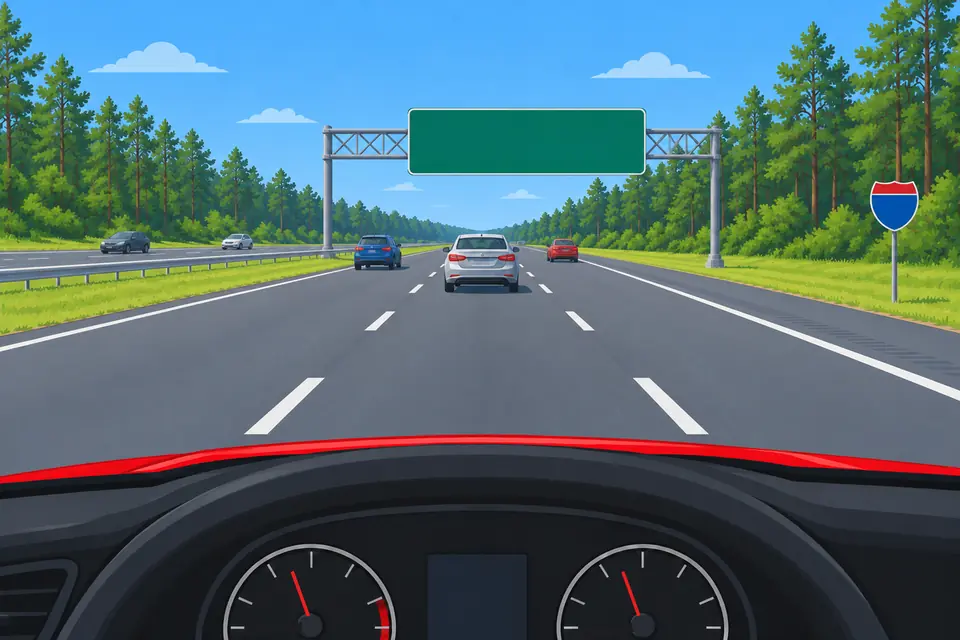
What is the maximum speed limit on interstate highways in North Carolina?
55 mph
65 mph
70 mph
75 mph
The maximum speed on NC interstates is 70 mph. Some sections may have lower limits. Always follow posted signs.
Question 11/25
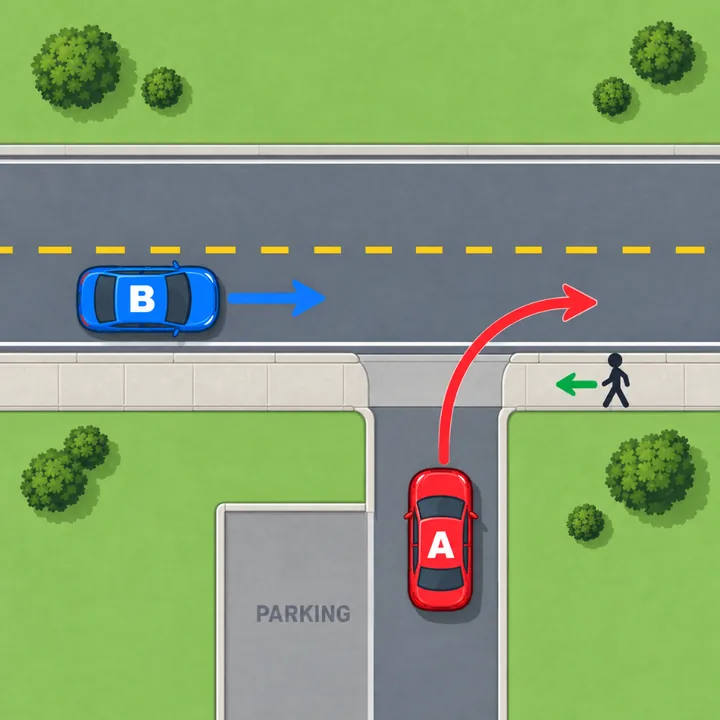
Car A exits a parking lot across a sidewalk onto a road where B travels. To whom must A yield?
Only car B, which is driving on the road
Only pedestrians walking on the sidewalk
Everyone: pedestrians and road traffic
No one, if it signals its turn early
Exiting a parking lot or driveway, the driver yields to everyone: first sidewalk pedestrians, then road traffic.
Question 12/25
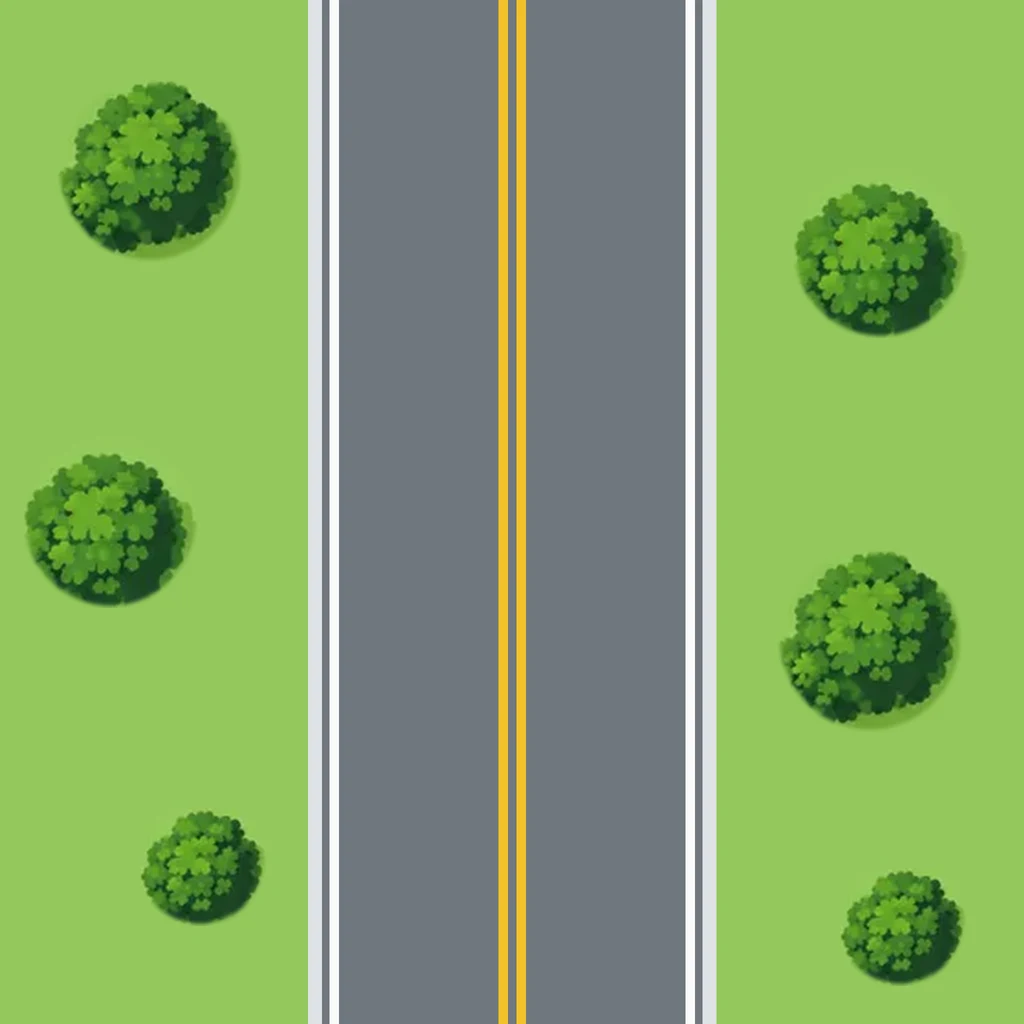
What does a double solid yellow line on the road mean?
Passing is allowed in both directions
Passing is allowed only when no oncoming traffic
Parking is allowed on both sides
Passing is prohibited in both directions
A double solid yellow line means passing and crossing the line is prohibited in both directions. Exception: turning left into a driveway.
Question 13/25
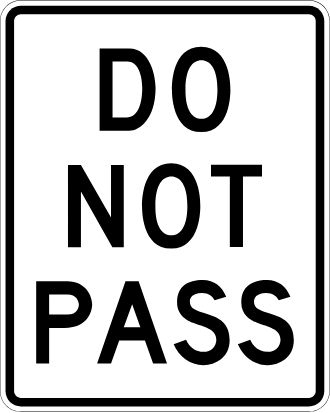
This sign marks a zone on a two-lane road. Which pavement marking goes with that zone?
A broken yellow line on your side of the center
A solid white line between you and oncoming cars
A broken white line down the middle of the road
A solid yellow line on your side of the center
DO NOT PASS marks a no-passing zone, which the NC handbook describes as a solid yellow line in your lane. The yellow pennant on the left side of the road emphasizes this sign and points to where the zone begins.
Question 14/25
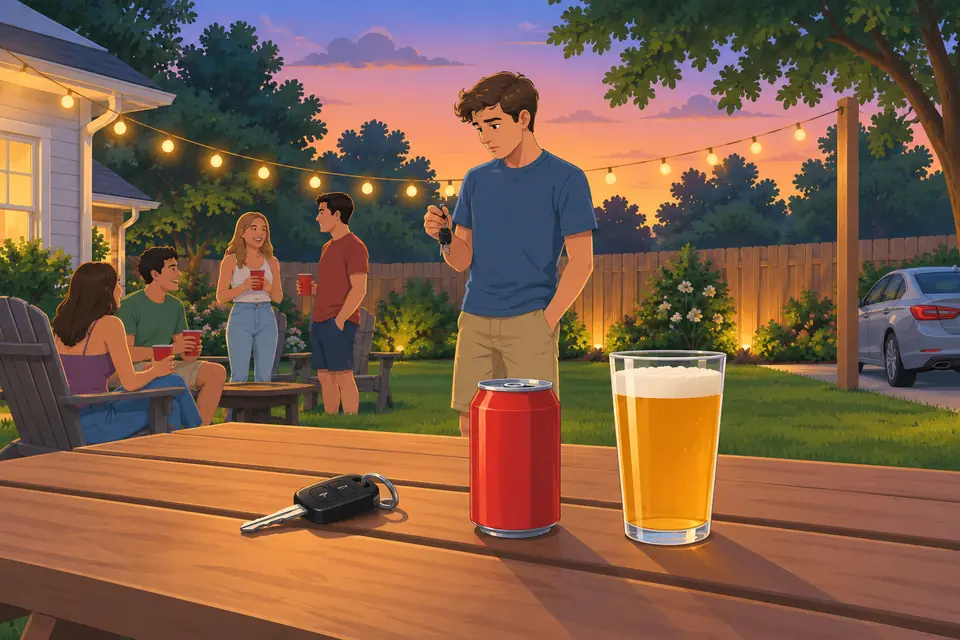
What is the BAC limit for drivers under 21 in NC?
For drivers under 21, NC has a zero tolerance policy: 0.00%. Any detectable amount of alcohol is a violation.
Question 15/25
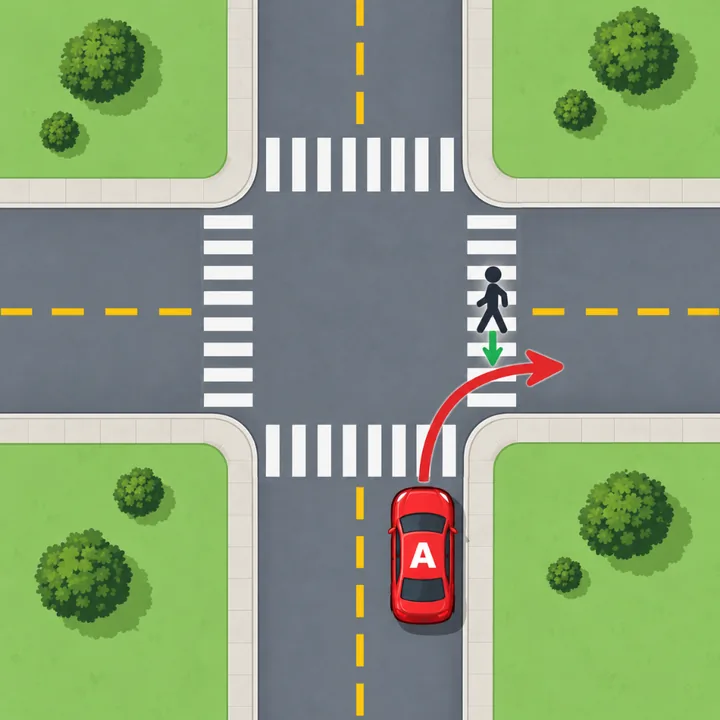
Car A turns right; a pedestrian is in the crosswalk A turns into. What must A do?
Stop and let the pedestrian cross
Finish the turn before the pedestrian gets close
Honk at the pedestrian and keep turning
Go on: the pedestrian must yield to a turning car
A pedestrian in the crosswalk has the right of way. The turning driver must stop, let them cross, then complete the turn.
Question 16/25
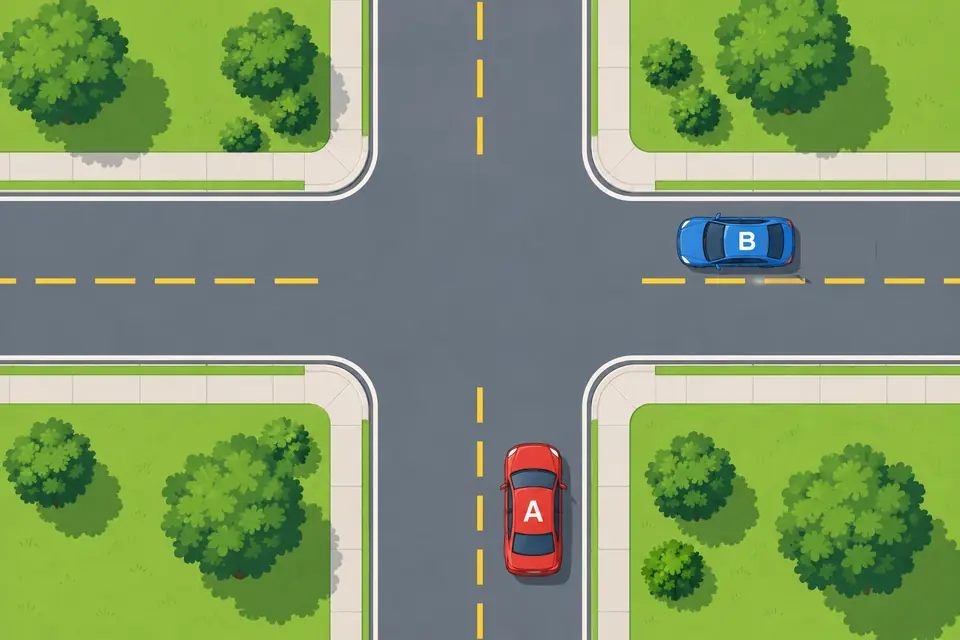
At an uncontrolled intersection (no signs or signals), two cars arrive at the same time from different directions. Who has the right of way?
The driver on the left
The faster driver
The driver who signals first
The driver on the right
At an uncontrolled intersection, the driver on the right has the right of way. Yield to traffic approaching from your right.
Question 17/25
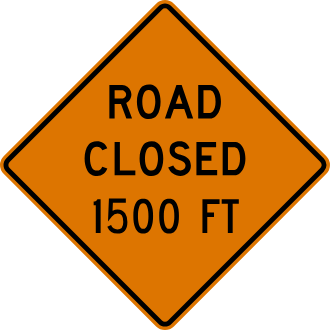
You see this sign, and the road ahead still looks open. What does the NC handbook tell you to do?
Keep going until you reach the barricade, then decide
Act on it now instead of waiting until the last minute
Follow the car ahead: it may know a way through
Ignore it unless workers are present on the road
ROAD CLOSED 1500 FT: the road is closed 1500 feet ahead. The NC handbook says black-on-orange signs give their message far in advance so that you have enough time: do not wait until the last minute to take the action they call for.
Question 18/25
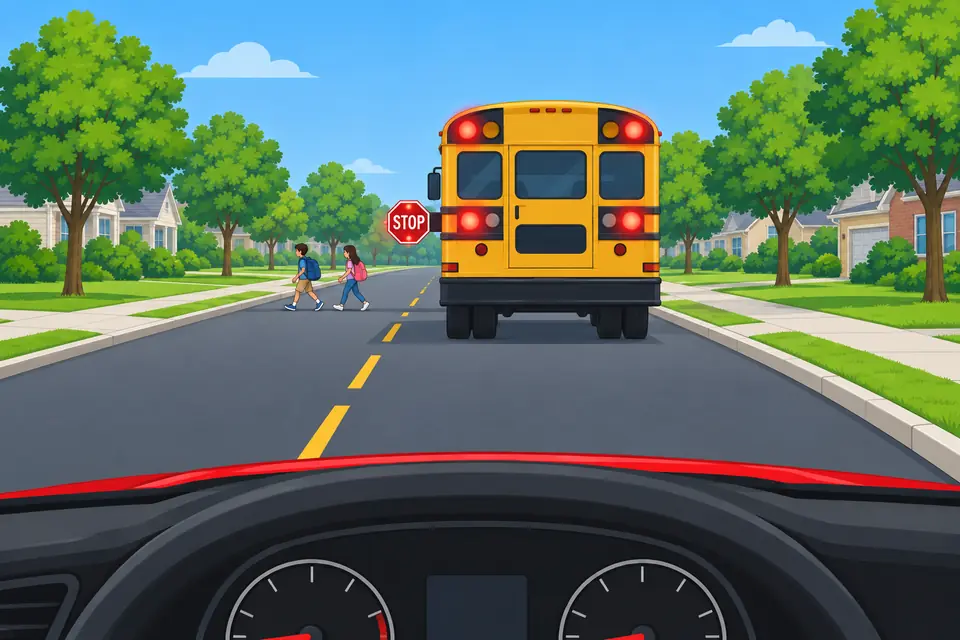
When may you proceed after stopping for a school bus with flashing red lights?
Right after a full stop, if no children are around
When the lights are off, the stop arm is in, and the bus moves
When all the children are on board and the door is closed
When the lights go off, even if the stop arm is still out
You may proceed only when the red lights turn off, the stop arm retracts, and the bus begins moving. Until then, stay stopped.
Question 19/25
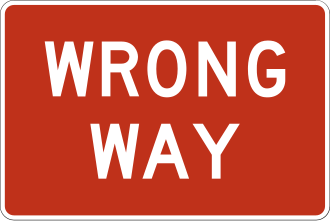
You see this sign. What should you do?
Slow down and keep going along the right edge
Keep going: this sign is meant for oncoming traffic
Stop right in your lane and turn on your hazards
Pull onto the right shoulder, then turn around when safe
WRONG WAY means you are driving against traffic. The NC handbook says to pull over to the right shoulder and stop, then turn around and head in the proper direction when the way is clear. This sign is often placed after DO NOT ENTER.
Question 20/25
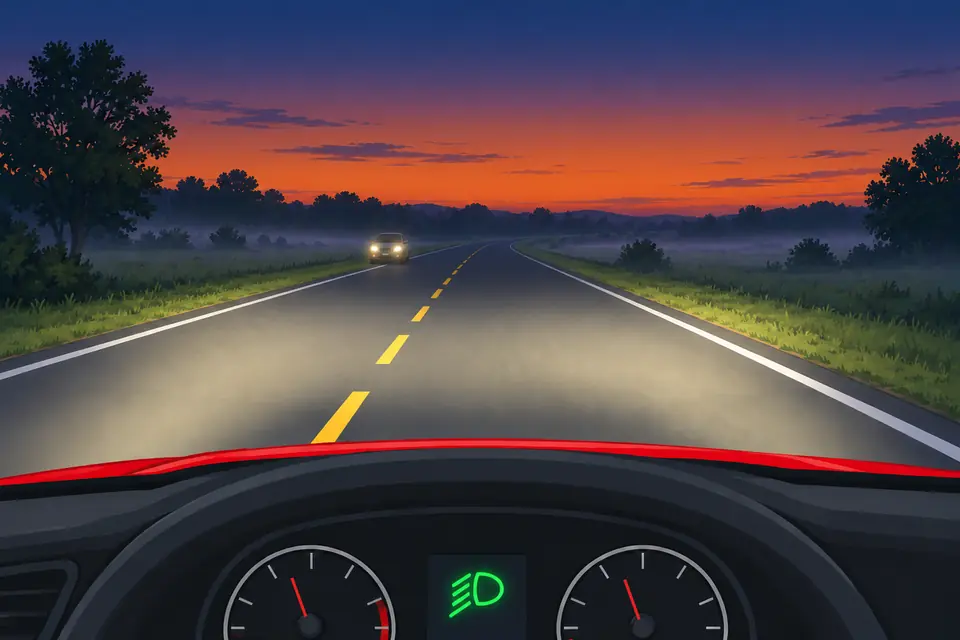
When are headlights required in North Carolina?
Sunset to sunrise and when visibility is 400 ft or less
From 30 minutes before sunset to 30 minutes after sunrise
Only at night, and only on roads without street lights
Sunset to sunrise, but only outside city limits
In NC, headlights are required from sunset to sunrise and whenever there is not enough light to see a person on the road 400 feet ahead (G.S. 20-129). They are also required whenever your wipers are on because of rain, snow or fog (except intermittent use in a light mist). The '30 minutes before sunset' rule is from other states, not NC.
Question 21/25
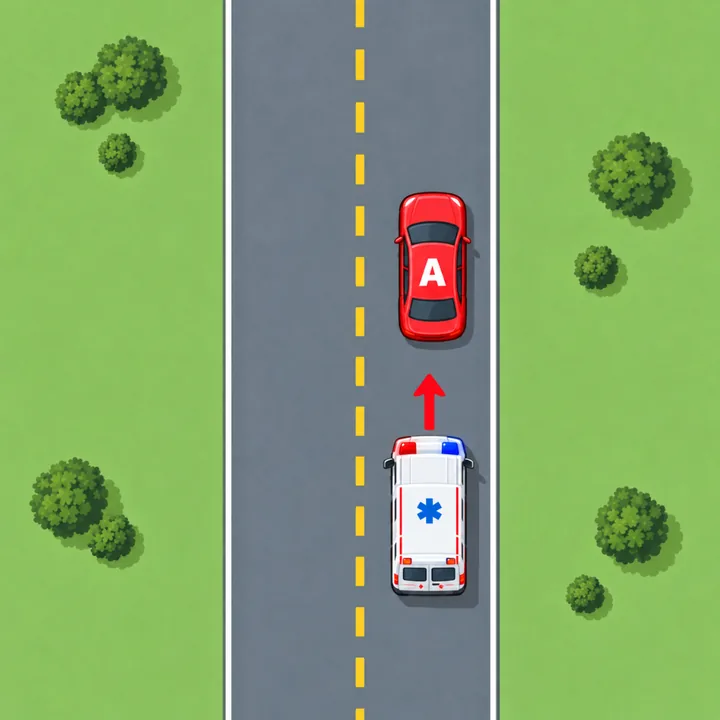
An emergency vehicle with lights and siren approaches car A from behind. What must A do?
Speed up to stay out of its way
Stop at once right in the travel lane
Move left to leave the right edge clear
Pull to the right edge of the road and stop
When an emergency vehicle approaches with lights and siren, pull to the right edge of the road and stop (not in an intersection) to let it pass.
Question 22/25
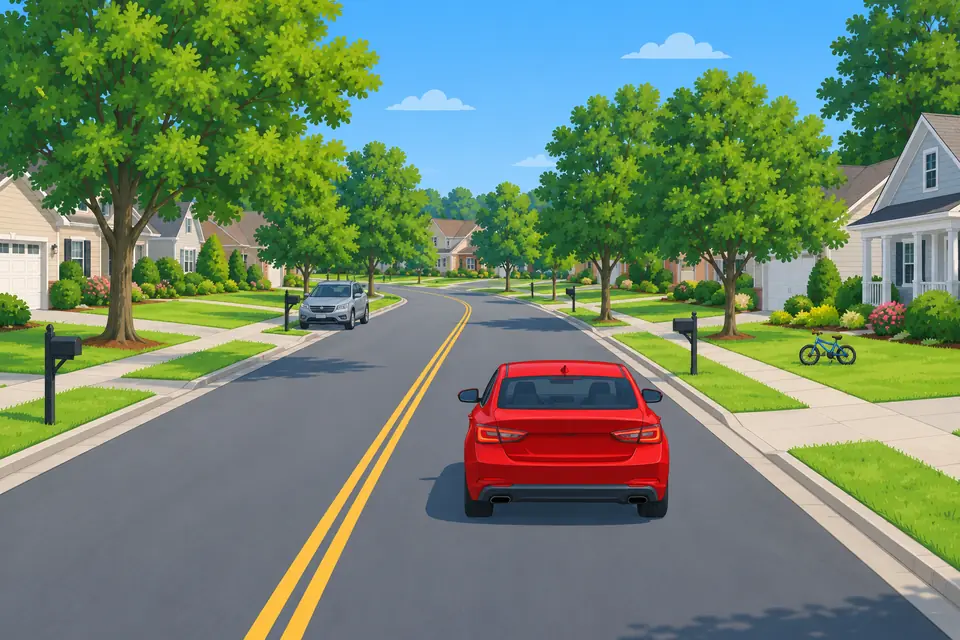
You are driving on a paved residential street inside a town. The street has a painted center line, and no speed limit sign is posted. What is the speed limit?
25 mph
35 mph
45 mph
55 mph
The handbook: unless otherwise posted, the speed limit is 35 mph in cities and towns (G.S. 20-141(b)(1)). From December 1, 2026, a new law (S.L. 2026-46, §17) sets a 25 mph default on any road that is unpaved or not marked with a center line. This street is paved and has a center line, so the limit is 35 mph both before and after that date.
Question 23/25
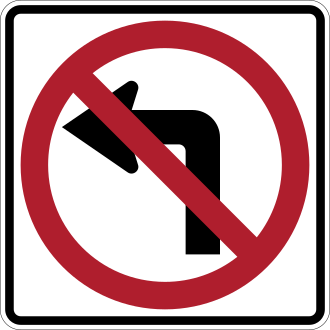
Which sign prohibits a left turn?
A red circle and slash over a left arrow means no left turn.
Question 24/25
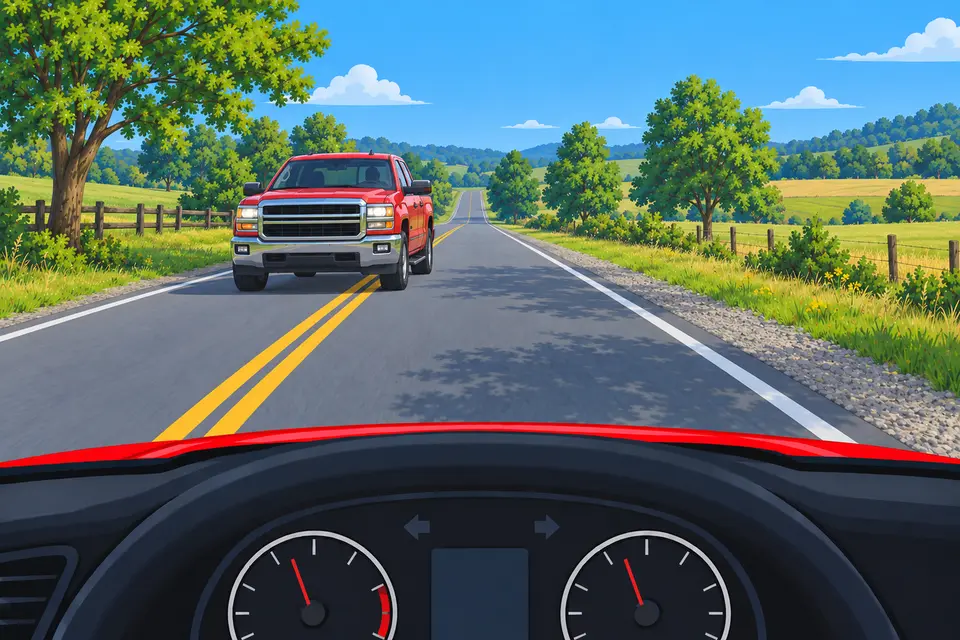
An oncoming car crosses the center line into your lane. What should you do?
Swerve left into the lane the other car left
Stop where you are without leaving your lane
Slow down, honk and move right
Flash your lights and keep going
Per the NC handbook, if an oncoming vehicle crosses into your path, reduce speed immediately, sound your horn and keep to the right, even if it means running off the road. Swerving left is dangerous because the other driver may return to their own lane.
Question 25/25
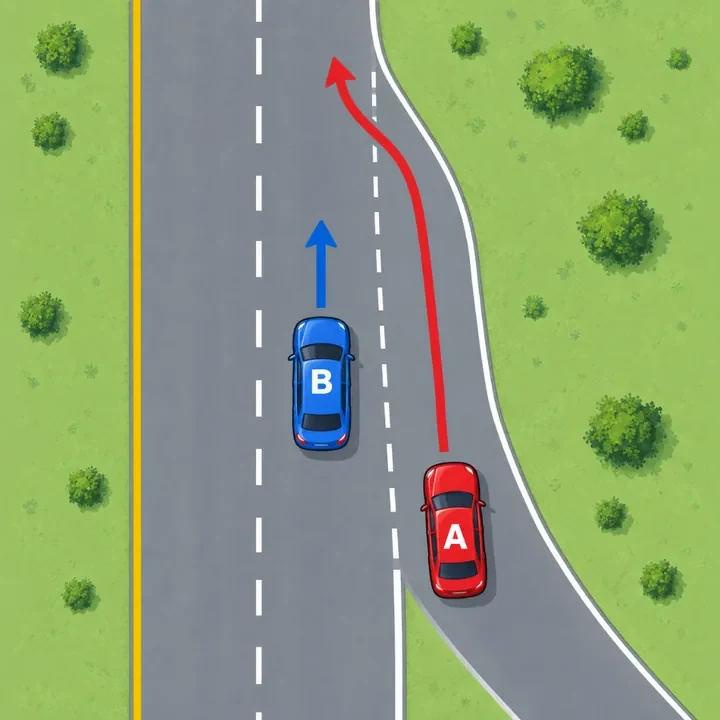
Car A enters the freeway via the ramp; B travels on the freeway. What must A do?
Stop at the end of the ramp and wait
Enter slowly; others must let it in
Honk so that B moves out of the right lane
Speed up and merge, yielding to freeway traffic
The entering driver accelerates to traffic speed on the ramp and merges, yielding to vehicles already on the freeway. Stopping on the ramp is dangerous.
Your result
0/25
That was a free sample of 25 questions. Full access has everything you need to arrive prepared:
- The sign trainer "Signs like at the DMV": signs without words, only shape and color, like on the DMV sign test
- 4 modes: signs like at the DMV, exam, signs and weak spots
- All 400 questions with an explanation for every answer
- 30 to 90 days on any device, with access right after payment
Full access from $9 →
Money-back guarantee: if you studied with the materials, took the DMV knowledge test within 30 days of your payment and did not pass on your first try, we refund your payment. Terms
Basic
$9
30 days, one-time payment
- 400 practice questions with explanations
- 4 study modes: sign trainer, exam, signs and weak spots
- 1 account
Buy for $9Card, Apple Pay, Google PayPay with PayPalMost popular
Until the test
$19
90 days, one-time payment
- Everything in Basic
- 1 account
- Printable quick guide for test day
- DMV document checklist
Buy for $19Card, Apple Pay, Google PayPay with PayPalFamily
$29
2 × 90 days, one-time payment
- Everything in Until the test
- 2 accounts, 90 days each: one seat is for a family member
- Quick guide and DMV checklist for both
Buy for $29Card, Apple Pay, Google PayPay with PayPal💳 Card payments are processed by Stripe. Sales tax, if your state charges it, is added on the payment page.
Your account is created automatically when you pay, using the email you enter on the payment page. We send a link to that email so you can set your password. If an account with that email already exists, the access is added to it. Access opens right after payment.
Already have an account? Log in before you pay so the access is added to that account. If you don’t, the access opens in the account for the email you pay with.
Before you pay: to get a license in North Carolina, the DMV asks for a Social Security number or documents that prove your lawful presence in the U.S. An ITIN is not accepted. If you cannot take the test, this material will not help you get a license.
Money-back guarantee: if you studied with the materials, took the DMV knowledge test within 30 days of your payment and did not pass on your first try, we refund your payment. Terms
How the North Carolina DMV test works
| Knowledge test | 25 multiple-choice questions |
|---|
| To pass | 20 correct out of 25 (at most 5 mistakes) |
|---|
| Sign test | Separate from the knowledge test: you must identify 9 of 12 signs |
|---|
| Time | No strict limit |
|---|
| If you do not pass | You can retake it after 7 calendar days |
|---|
| Vision test | Done at the DMV office |
|---|
| Languages | The NCDOT offers the knowledge test in several languages. Confirm with your office before you go. |
|---|
No DMV publishes the questions of its test. All practice questions, ours included, are written from the official North Carolina handbook. If someone sells "the exact test answers," it is a scam.
Why practice the signs on their own?
Many signs have words on them: STOP, YIELD, ONE WAY, DO NOT ENTER, WRONG WAY, NO TURN ON RED. On the sign test, though, the DMV shows 12 signs without words: only the shape and the color. You must identify 9. Our "Signs like at the DMV" trainer shows signs the same way, without words, and reveals the real sign after each answer. We have not seen this in other practice sites.
The official North Carolina Driver Handbook is free on ncdot.gov (official PDF).
What full access includes, from $9
- The sign trainer "Signs like at the DMV": silhouettes without words
- Modes: signs like at the DMV, exam, signs and weak spots
- 400 practice questions with an explanation for every answer
- 30 to 90 days of access depending on the plan, on all devices, paid by card or PayPal
Get access, from $9 →
More information: the North Carolina course and the 400 DMV practice tests
What else helps before the test
Frequently asked questions
How many questions are on the North Carolina DMV knowledge test?
The knowledge test has 25 multiple-choice questions and you pass with 20 correct answers, which means you can miss up to 5. Signs are tested separately: for a Class C license you must identify 9 of 12.
Are these the same questions as on the DMV test?
No. No DMV publishes the questions of its test. Our questions were written from the official North Carolina handbook and match the test in topics and format, not word for word.
Is this test really free?
Yes. The 25-question test on this page is free and needs no sign-up. Full access, with 400 questions and the sign trainer, starts at $9.
How long does it take to prepare?
It depends on the person. A reasonable guide is one or two weeks of regular practice. Start with this test: if you score 20 or more, review your mistakes; if you score less, read the official driver handbook and practice again.
Updated: October 2026
Driver-Prep is an independent educational project. We are not affiliated with the NCDMV or the NCDOT; the practice questions are written from the official North Carolina driver handbook.

 RU
RU