The second free set of 25 questions for the North Carolina DMV knowledge test (the written test many people call the NC permit test). None of these questions is in our other free tests. Same format as the real test: you need 20 correct to pass, and every answer comes with an explanation based on the current NC driver handbook. No sign-up.
25 questions
To pass: 20 of 25
12 with pictures
An explanation for every answer
✓Questions checked against the 2026 NC Driver’s Handbook
Question 1/25
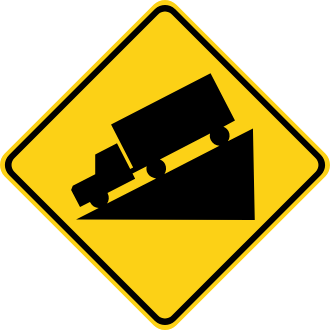
You are on a rural road and see this sign. What does it warn about?
Trucks entering from a side road
Falling rocks or gravel on the road
Steep downhill grade ahead
Truck weigh station ahead
This is the Hill sign: a truck on a slope warns of a steep downgrade ahead. The NC handbook advises shifting to a lower gear at the top, before you start down, and controlling speed with the gear instead of the brake pedal to prevent excessive brake wear.
Question 2/25
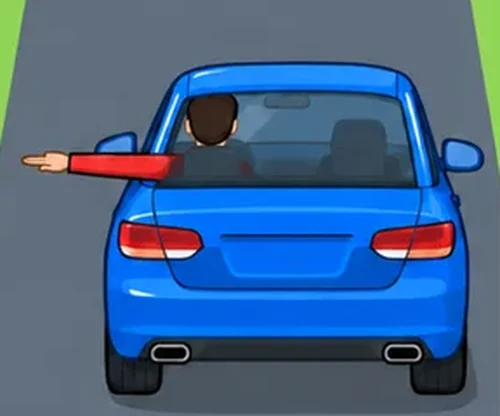
How do you signal a left turn using hand signals?
Arm extended straight out to the left
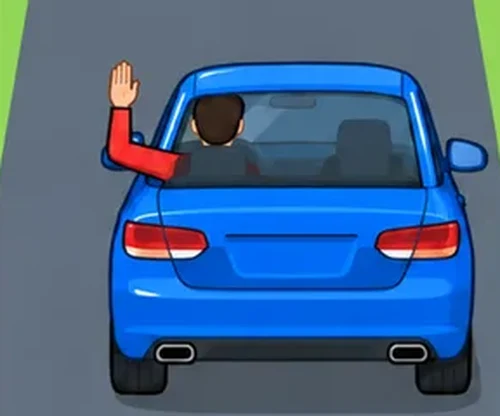
Arm bent up at the elbow
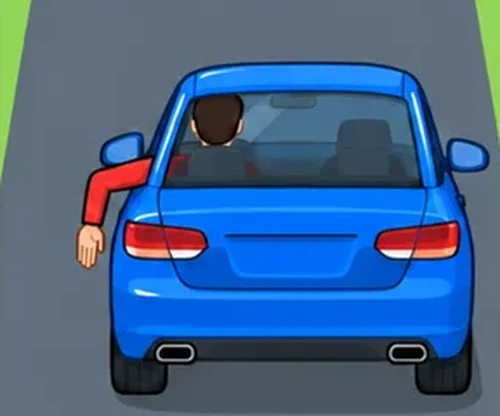
Arm bent down, palm back
Arm out, hand waving others on
To signal a left turn, hold arm and hand straight out the driver's window, pointing with index finger. For a right turn, hold your arm up; to stop, hold it down.
Question 3/25
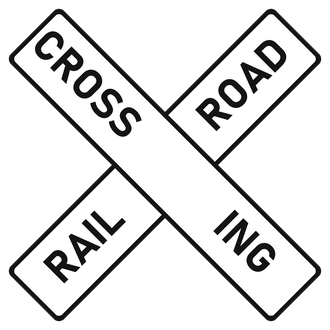
A rural crossing has only this sign, with no lights and no gates. A train is approaching. Who goes first?
You do, if you can clear the tracks before it arrives
You do: with no lights or gates, you need not stop
The train, if it is blowing its horn
The train, even with no lights or gates
The X-shaped crossbuck marks the railroad crossing itself. Vehicles must always yield to a train, even when the crossing has only a crossbuck and no lights or gates.
Question 4/25
You have to walk along a road that has no sidewalk. Which side of the road should you walk on?
The left side, facing traffic
The right side, going with traffic
Either side, as long as you wear white
In the middle, near the center line
The NC Driver Handbook says pedestrians should always walk on the left side of the road facing traffic and wear or carry something white. At night drivers have a harder time seeing you, so use a flashlight.
Question 5/25
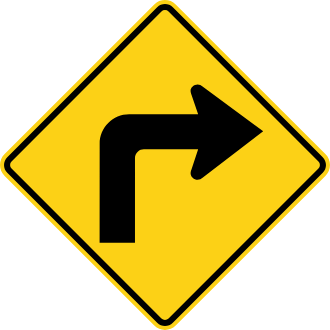
What kind of turn ahead does this sign show?
Right turn only from this lane
Detour to the right
Gentle curve to the right ahead
Sharp turn to the right ahead
An arrow bent at nearly a right angle (Right Turn sign) warns of a sharp turn in the road to the right, so slow down more than for a gentle bend. A gentle bend uses the Curve sign with a smoothly bent arrow. A yellow diamond only warns about the road shape; it does not assign a turn lane.
Question 6/25
According to the NC Driver Handbook, what helps a person sober up after drinking?
Only time
Strong black coffee
A cold shower
A big meal
The handbook says: 'The only thing that sobers up a drinker is time. Coffee, a big meal or cold showers will not work.' Alcohol slows your reactions, hurts your judgment of speed and distance and gives false confidence, so do not drive after drinking.
Question 7/25
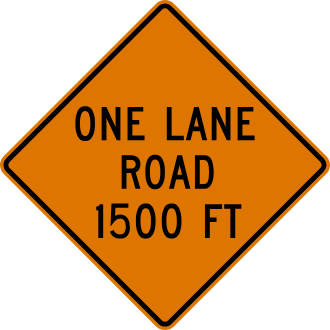
You are on a country road with one lane each way when this sign appears on the shoulder. What should you prepare for?
The road ahead is closed: find a detour
A one-way street begins in 1500 feet
Ahead, one lane is for local traffic only
Both directions will share one lane
The orange ONE LANE ROAD 1500 FT sign means that in about 1500 feet (460 m) the work zone narrows to one lane, and traffic from each direction takes turns using it, often directed by a flagger. The NC handbook says to STAY ALERT in work zones and, when you see the Flagger sign, be prepared to stop.
Question 8/25
According to the NC Driver Handbook, about what share of all traffic deaths involve alcohol?
About 15%
About 25%
About 38%
About 50%
The NC Driver Handbook says about 38 percent of all traffic fatalities involve alcohol. That is more than one in every three road deaths.
Question 9/25
This sign has no words. What should you do when you see a round yellow sign like this one?
Speed up to clear the intersection sooner
Move left: your lane is about to end here
Stop and wait for a flagger to wave you on
Slow down: a railroad crossing is ahead
A round yellow sign gives advance warning of a railroad crossing; on the road it carries a black cross and the letters RR. Slow down and stop if necessary to be sure you can safely clear the crossing.
Question 10/25
According to the NC Driver Handbook, what decides how many documents a non-citizen must show to prove legal presence in the US?
Your country of citizenship
Your immigration status
How long you have lived in NC
The license type: a permit needs fewer
Handbook Table (5): 'Based on your legal presence status, you may be required to present multiple documents.' In practice this means a Green Card (I-551) or an EAD (I-766) is listed on its own, while an I-20 or DS-2019 is listed only together with an I-94 or a passport with a CBP admission stamp (Table (5), p.21).
Question 11/25
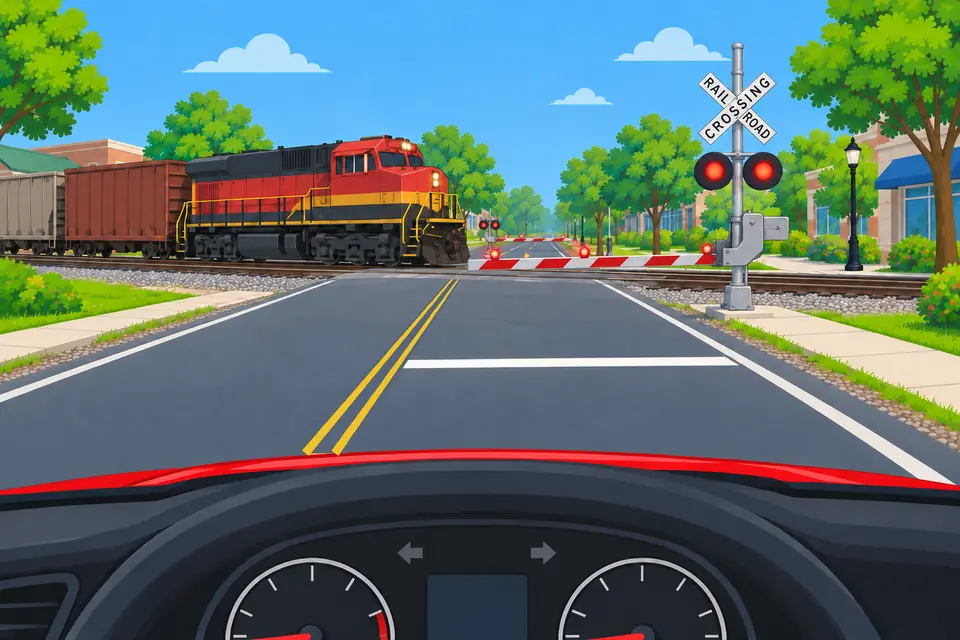
What must you do approaching a railroad crossing with lowering gates and flashing lights?
Drive around the gate if no train is visible
Speed through before the gate comes down
Stop until the gate is fully up and the lights stop
Stop, then go as soon as the train has passed
Stop and wait until the gate fully rises and the flashing lights stop. Driving around a lowered gate is deadly and illegal.
Question 12/25
How long must you hold the Level 2 limited provisional license before you apply for the Level 3 full provisional license?
30 days
90 days
6 months
12 months
The NC Driver Handbook says you must hold the Level 2 license at least six months before applying for a Full Provisional License. Eligible drivers can upgrade from Level 2 to Level 3 online.
Question 13/25
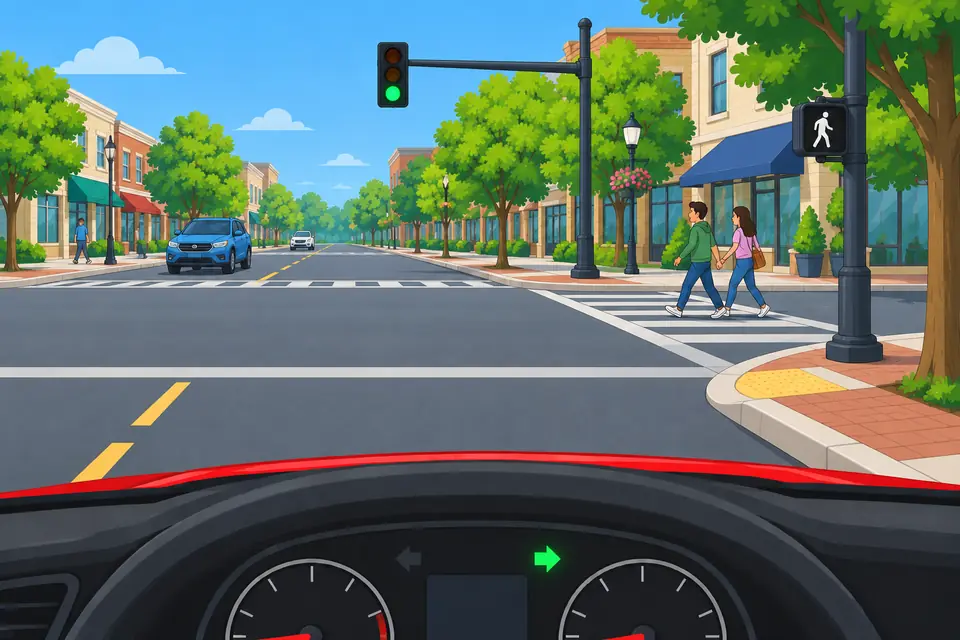
A pedestrian is crossing on a green pedestrian signal. You are turning at this intersection. Who has the right of way?
You, because you also have a green
The pedestrian
You, if you entered the intersection first
Turning cars first, then the pedestrian
When crossing with a green signal, pedestrians have the right of way over all vehicles, including those turning across their path. A safe driver always yields to pedestrians.
Question 14/25
What is the maximum speed for school activity buses in NC?
35 mph
45 mph
55 mph
65 mph
School activity buses can travel up to 55 mph, higher than regular school buses (45 mph).
Question 15/25
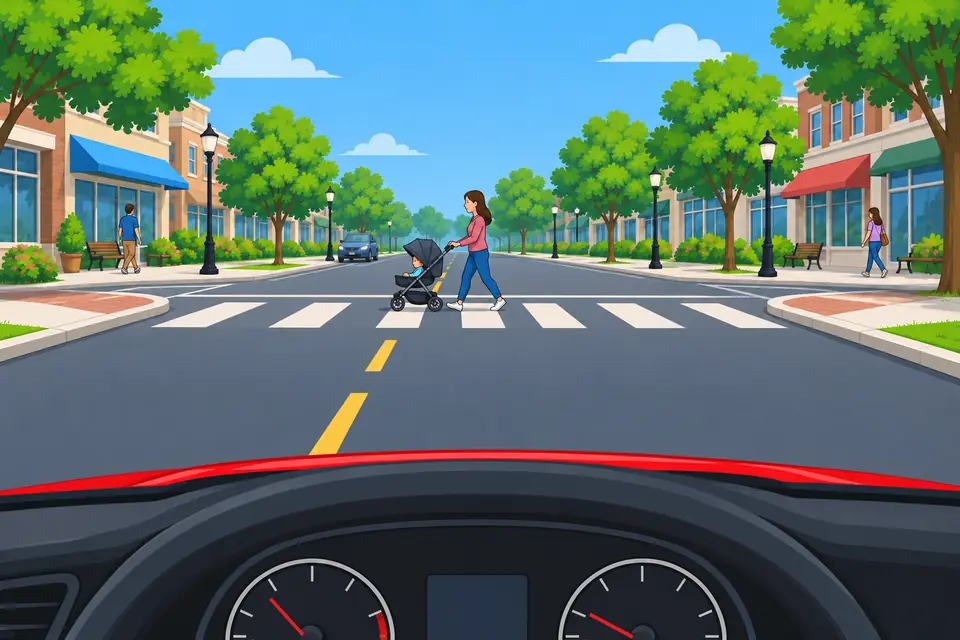
At an intersection without traffic signals, a pedestrian has started crossing the road in the crosswalk. Who has the right of way?
The pedestrian
The driver, if the crosswalk is unmarked
The driver, if the pedestrian is still in the far lane
Whoever reached the intersection first
At an intersection without signals, pedestrians have the right of way if they are in a marked crosswalk or in an unmarked one (the imaginary lines extending the sidewalks across the street). A safe driver always yields to pedestrians.
Question 16/25
At night with working headlights, how far away should you be able to see a person with high beams and with low beams?
High 100 feet, low 50 feet
High 200 feet, low 75 feet
High 300 feet, low 150 feet
High 500 feet, low 200 feet
The NC Driver Handbook says that with high beams you should be able to see a person 200 feet away, and with low beams 75 feet away. Do not confuse this with the dimming rule in NC law (G.S. 20-131(a) and 20-181): dim within 500 feet of an oncoming car and within 200 feet when following a car.
Question 17/25
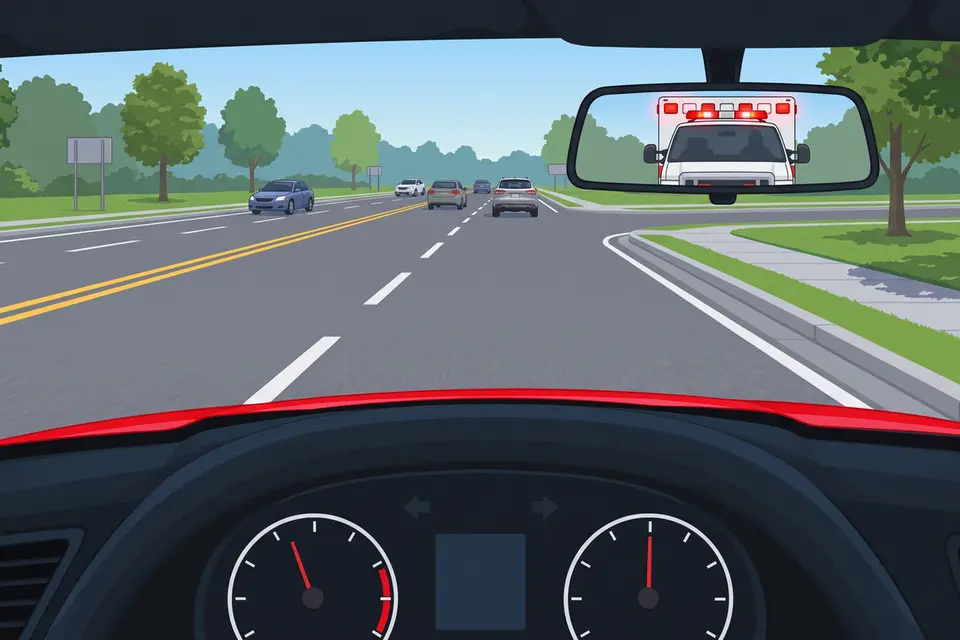
What must you do when an ambulance with flashing lights and siren is approaching you?
Speed up and get out of its way without stopping
Keep driving in your lane but slow down
Move into the left lane and keep going
Pull to the right edge and stop
When an emergency vehicle (police, ambulance, fire truck) approaches with lights and siren, pull to the right edge and stop completely. Wait until it passes.
Question 18/25
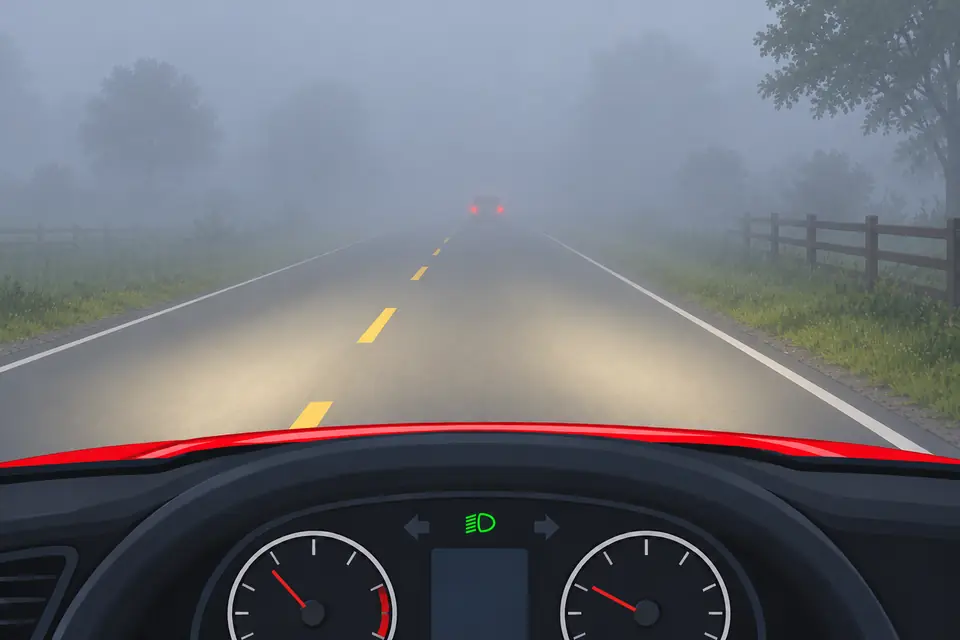
What should you do when driving in fog?
Turn on high beams for better visibility
Turn on low beams and reduce speed
Turn on hazard lights and continue driving
Drive in the center of the road
In fog, turn on your low beams, reduce speed, watch for the tail lights of the vehicle ahead and for vehicles behind you.
Question 19/25
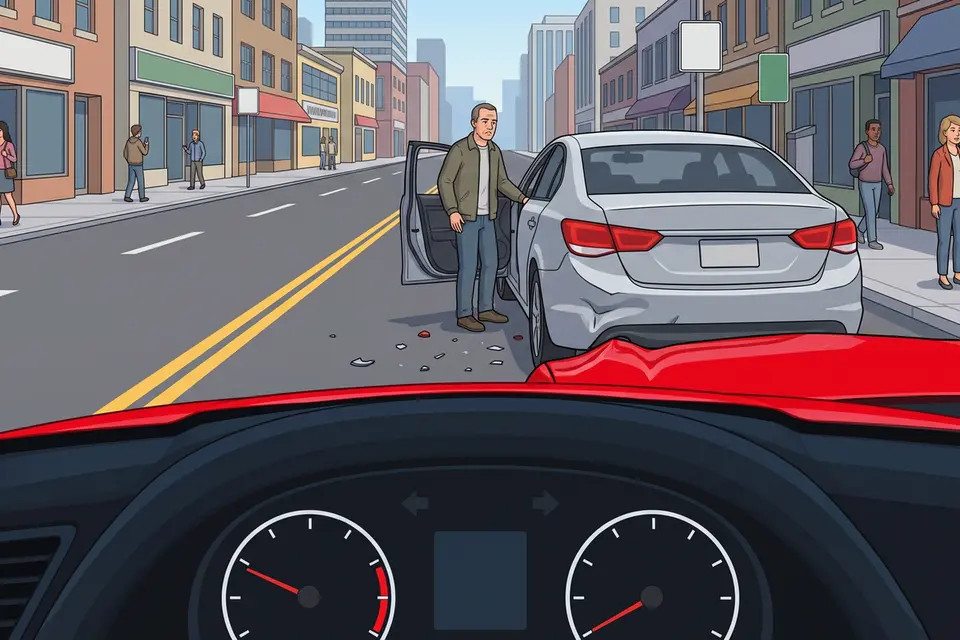
What should you do first if you are in a traffic crash?
Stop, help the injured and call for help
Stop if someone looks hurt; if not, drive on
Move both cars off the road, then check for injuries
Take photos for insurance before anything else
In a crash you must stop immediately (leaving is illegal), help the injured and make sure someone calls law enforcement. Only if no one is hurt and the car can be driven safely, move it out of the travel lane onto the shoulder.
Question 20/25
Until what age and weight must a child be in a child restraint system in NC?
Under age 8 and under 80 lbs
Under age 5 and under 40 lbs
Under age 10 and under 100 lbs
Under age 6 and under 60 lbs
Under NC law a child must be in a child restraint while under age 8 AND under 80 lbs. A regular seat belt is allowed once the child reaches age 8 OR 80 lbs, whichever comes first.
Question 21/25
How should you adjust your following distance in bad conditions (rain, fog, snow)?
Keep the usual 2 seconds but brake earlier
Increase it, leaving extra space
Shorten it to keep the taillights ahead in sight
Keep it the same and switch on high beams
In bad conditions, increase your following distance: the NC handbook says to allow at least twice the normal distance in rain (4 seconds or more instead of 2), because stopping distance is longer and visibility is worse. In fog, use low beams, not high beams.
Question 22/25
On a road with no bike lane, in which direction should a bicyclist ride?
Facing traffic, to see the cars coming
On whichever side has the wider shoulder
In the middle of the left travel lane
With the traffic, on the right
The NC Driver Handbook says it is especially important for bicyclists to go with the flow of traffic, not against it: ride right, with the traffic, not facing traffic. Motorists often do not look in the direction of bicyclists riding the wrong way.
Question 23/25
On a two-lane road, the car ahead of you stops at a crosswalk, and you cannot see why. What should you do?
Do not pass: people may be crossing in front of it
Pass it on the left once the oncoming lane is clear
Honk once, then go around it slowly on the right
Pass quickly before anyone steps out in front
The NC Driver Handbook lists intersections or crosswalks where a vehicle has stopped to allow people to cross as places where passing is always unsafe and usually illegal. The stopped car can hide a pedestrian from your view.
Question 24/25
Who must wear a motorcycle helmet in NC?
Only the rider; the passenger may choose
Only riders and passengers under 21
Everyone: rider and passenger, any age
Only on roads posted 45 mph or more
In NC every motorcycle and moped rider and passenger must wear a helmet, at any age (G.S. 20-140.4; handbook p.45).
Question 25/25
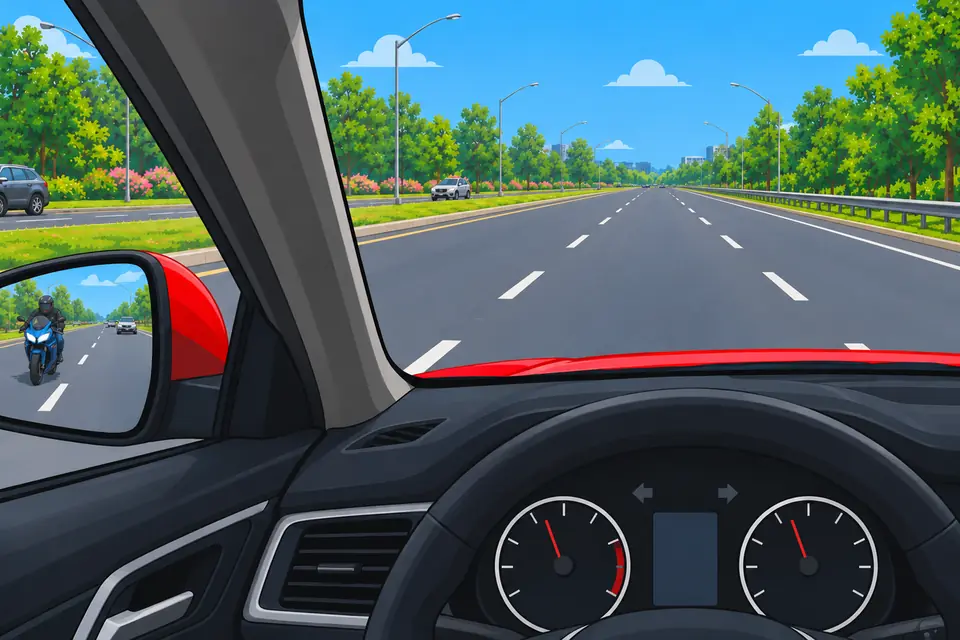
What should you keep in mind about motorcycles when you are about to change lanes?
Your side mirrors will show a motorcycle right beside you
You may move in next to a motorcycle within its lane
A motorcycle's headlight makes it easy to see in time
A narrow motorcycle can hide entirely in a blind spot
Motorcycles are hard to see and can be entirely hidden by your blind spot. Before changing lanes, check your mirrors and also look over your shoulder. A motorcycle is entitled to the full width of its lane.
✓One-time payment, no subscription or auto-renewal
✓No sign-up: your account uses your payment email
✓Failed on your first try within 30 days of payment? Send a photo of the result and we refund you within 5 business days (Terms)
NC issues licenses with an SSN; without one, only to people not eligible for an SSN, on documents of lawful presence. An ITIN is not accepted. If you cannot get a license, this course will not help.
💳 Card payments are processed by Stripe. Sales tax, if your state charges it, is added on the payment page.
Your account is created automatically when you pay, using the email you enter on the payment page. We send a link to that email so you can set your password. If an account with that email already exists, the access is added to it.
Already have an account? Log in before you pay so the access is added to that account. If you don’t, the access opens in the account for the email you pay with.
We will email you a review of your mistakes: each question you missed, the correct answer and the explanation. It helps you study before the test.
Your review arrives right away, followed by 2 more emails (a reminder and a list of tips). No spam: you can unsubscribe with one click. By submitting your email you agree to receive them; see the privacy policy.
What practice test 2 covers
Signs, signals and pavement markings: 6 questions
Right of way, school buses, railroad crossings: 6 questions
Alcohol, points and license rules: 4 questions
Speed and following distance: 2 questions
Safe driving: weather, night, emergencies, sharing the road: 7 questions
The questions cover the main topics of the North Carolina driver handbook. The sign test is separate at the DMV: 12 signs shown without words, and you must identify 9. Practice it with our North Carolina road signs guide.
Before the real test
The knowledge test usually has 25 questions; the official rule is 80% correct (19A NCAC 03B .0201), which is 20 of 25. If you do not pass, you can retake it after 7 calendar days. The full guide to the test format is on free practice test 1.
Written and checked by the Driver-Prep team against the current North Carolina Driver Handbook (revised May 2025). Updated .
Driver-Prep is an independent educational project. We are not affiliated with the NCDMV or the NCDOT; the practice questions are written from the official North Carolina driver handbook.
 RU
 Español