Free practice exam — 25 sample questions from the bank of 300
Same format as the NC DMV test: 25 questions, you need 20 right to pass. Plain-Russian explanation after each answer. No registration — find out in 2 minutes if you would pass. All 300 questions with explanations are inside the full access.
Question 1/25
On a two-lane road without a median, a school bus ahead of you has stopped with flashing red lights. What must you do?
Stop and wait until the bus resumes motion
Pass the bus on the left if no oncoming traffic
Slow down to 25 mph and proceed slowly
Stop only if you see children
On a two-lane road without a median, ALL traffic from both directions must stop when a school bus displays its flashing red lights and stop arm. Wait until the lights are turned off and the bus starts moving.
Question 2/25
On a four-lane divided highway with a median, a school bus has stopped on the opposite side. Must you stop?
Yes, always
No, only traffic traveling in the same direction as the bus must stop
Yes, but only if children are visible
No, if you are traveling above 45 mph
On a divided highway with a median separation, only traffic following the bus must stop. Oncoming traffic may continue.
Question 3/25
What is the maximum speed limit for a school bus in North Carolina?
35 mph
40 mph
45 mph
55 mph
The maximum speed limit for a school bus in NC is 45 mph, regardless of posted speed limits.
Question 4/25
What is the blood alcohol concentration (BAC) limit for drivers aged 21 and older in North Carolina?
0.05%
0.08%
0.10%
0.04%
In NC, the BAC limit for drivers 21+ is 0.08%. However, you can be charged with DWI at a lower BAC if your driving is noticeably impaired.
Question 5/25
What is the BAC limit for commercial driver license (CDL) holders in North Carolina?
0.08%
0.04%
0.02%
0.00%
For CDL holders, the BAC limit is half the regular limit — 0.04%. Commercial drivers carry greater responsibility due to vehicle size and weight.
Question 6/25
What is the BAC limit for drivers under 21 in NC?
0.08%
0.04%
0.02%
0.00% (zero tolerance)
For drivers under 21, NC has a zero tolerance policy — 0.00%. Any detectable amount of alcohol is a violation.
Question 7/25
What can speed up the elimination of alcohol from your body?
Strong coffee
A cold shower
Eating food
Nothing — only time
About 90% of alcohol is eliminated by the liver at a constant rate — about one drink per hour. Coffee, food, and showers do not speed this up.
Question 8/25
What is the maximum speed limit on interstate highways in North Carolina?
55 mph
65 mph
70 mph
75 mph
The maximum speed on NC interstates is 70 mph. Some sections may have lower limits — always follow posted signs.
Question 9/25
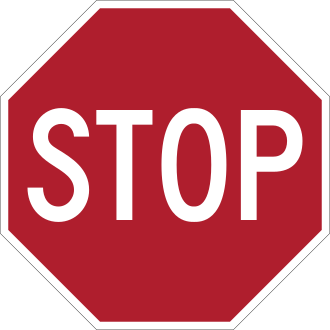
What does this road sign mean?
A complete stop is required
Yield to other traffic
Slow down
Intersection ahead
The octagonal red STOP sign is the only sign of this shape in the US. A complete stop is required, even if no one is at the intersection.
Question 10/25
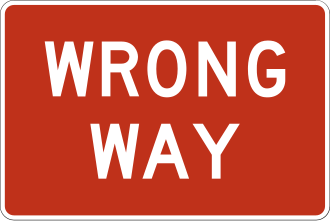
You see this sign. What should you do?
Stop immediately and turn around — you are going the wrong way
Slow down and be more cautious
Continue, this is an informational sign
Right turn is prohibited
WRONG WAY means you are driving against traffic. Stop immediately and safely turn around. This sign is often placed after DO NOT ENTER.
Question 11/25
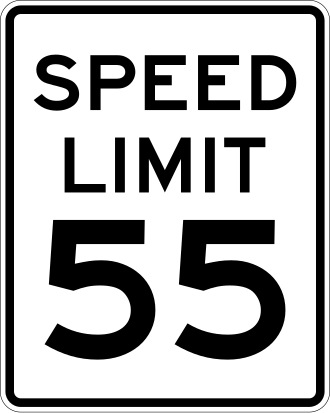
You see this sign on a rural road. What is the maximum allowed speed?
45 mph
55 mph
65 mph
Depends on weather
The sign shows a 55 mph limit — this is the maximum speed on this section. In bad weather you must drive slower, but the sign shows the upper limit.
Question 12/25
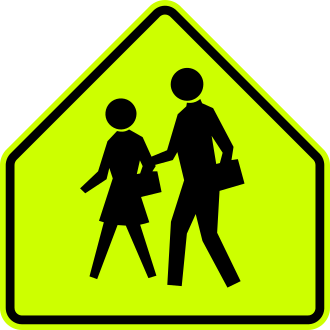
You see this sign. What must you do?
Come to a complete stop
Slow down and be prepared to stop — school zone ahead
Yield to school bus
Turn on hazard lights
This pentagon-shaped sign warns of a school zone ahead. Slow down and be prepared to stop — children may enter the road.
Question 13/25
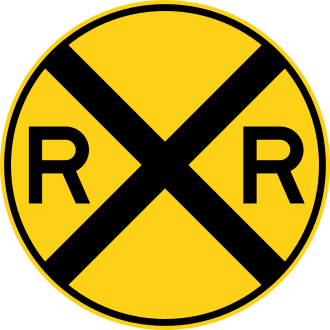
You see this sign. How should you react?
Slow down — work zone ahead
Prepare to stop — railroad crossing ahead
Yield — roundabout ahead
Proceed with caution — pedestrian crossing ahead
This round yellow sign with RR warns of a railroad crossing ahead. It is the only circular sign on US roads. Be prepared to stop.
Question 14/25
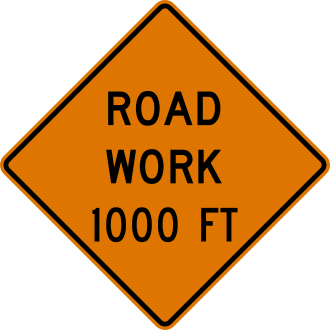
You see this sign on the road. What does it mean and how should you act?
Work zone ahead — slow down (speeding carries an additional $250 fine)
Road closed — turn around
Worker parking
Gas station ahead
Orange signs indicate a construction/work zone. Slow down and watch for workers. Speeding in an NC work zone carries an additional $250 fine (where penalty signs are posted).
Question 15/25
At an uncontrolled intersection (no signs or signals), two cars arrive at the same time from different directions. Who has the right of way?
The driver on the left
The driver on the right
The faster driver
The driver who signals first
At an uncontrolled intersection, the driver on the right has the right of way. Yield to traffic approaching from your right.
Question 16/25
At an intersection with a green light, you are turning left. Must you yield to oncoming traffic?
No, the green light gives you priority
Yes, yield to oncoming traffic and pedestrians
No, if you signal your turn
Yes, but only to pedestrians
When turning left on a green light, you must yield to all oncoming traffic and pedestrians crossing the intersection.
Question 17/25
Is a right turn on red allowed in North Carolina?
No, never
Yes, always without stopping
Yes, after a complete stop, if there is no sign prohibiting it and it is safe
Only in rural areas
In NC, right turn on red is allowed by default. But you must first come to a complete stop, yield to pedestrians and oncoming traffic. If there is a NO TURN ON RED sign — the turn is prohibited.
Question 18/25
What must you do when an ambulance with flashing lights and siren is approaching you?
Speed up and get out of the way
Pull over to the right edge of the road and stop completely
Continue driving but slow down
Move to the left lane
When an emergency vehicle (police, ambulance, fire truck) approaches with lights and siren — pull to the right edge and stop completely. Wait until it passes.
Question 19/25
Within what distance of an emergency vehicle stopped to investigate a crash or render assistance is parking prohibited?
50 feet
100 feet
200 feet
500 feet
You may not park within 100 feet of an emergency vehicle that has stopped to investigate an accident or provide assistance.
Question 20/25
What rule does the NC Driver Handbook recommend for safe following distance?
One-second rule
Two-second rule
Three-second rule
Four-second rule
The NC Driver Handbook recommends the two-second rule: choose a fixed point, and if you reach it in less than 2 seconds after the car ahead — increase your following distance.
Question 21/25
When are headlights required in North Carolina?
30 minutes before sunset to 30 minutes after sunrise
From sunset to sunrise and when visibility is less than 400 feet
Only at night
Only in rain
In NC, headlights are required from sunset to sunrise and when visibility is less than 400 feet (rain, fog, snow). The '30 minutes before sunset' rule is from other states, not NC.
Question 22/25
Within what distance of an oncoming vehicle must you dim your high beams?
200 feet
300 feet
500 feet
1000 feet
You must dim high beams within 500 feet of oncoming traffic. When following another vehicle — within 200 feet.
Question 23/25
What does yellow pavement marking indicate?
Separates lanes going the same direction
Separates traffic going in opposite directions
Marks a parking zone
Marks a work zone
Yellow markings separate traffic moving in opposite directions. White markings separate lanes moving in the same direction.
Question 24/25
What does a double solid yellow line on the road mean?
Passing is allowed in both directions
Passing is prohibited in both directions
Passing is allowed only when no oncoming traffic
Parking is allowed on both sides
A double solid yellow line means passing and crossing the line is prohibited in both directions. Exception — turning left into a driveway.
Question 25/25
When entering a roundabout, to whom must you yield?
No one — entering traffic has priority
Traffic already circulating in the roundabout
Pedestrians only
Traffic on the left only
When entering a roundabout, you yield to traffic already in the circle. Traffic flows counterclockwise.
Your result
0/25
This was a free sample. Unlock all 300 questions with explanations + the full handbook.
Get full access for $9 →
We'll send you a breakdown of your weak spots and a reminder — leave your email:
One reminder email, no spam. Unsubscribe in one click.